Bicycle Accidents in Austin: Why "Bike Friendly" Streets Are Still Dangerous
Austin loves to brag about being bike-friendly. We have the Lance Armstrong Bikeway, the boardwalk, and those bright green lanes painting the asphalt on Guadalupe and 3rd Street.
But if you actually ride a bike here, whether you are commuting to downtown or just getting a workout on the weekend, you know the truth. Austin drivers are aggressive, distracted, and often confused by how to share the road.
When a 3,000-pound Tesla hits a 20-pound road bike, the physics are unforgiving. And unfortunately, the legal aftermath can be just as brutal. Insurance companies love to blame the cyclist, counting on the fact that many people (and potential jurors) find bikers "annoying."
If you have been hit while riding in Austin, you are not just fighting for a settlement; you are fighting against a bias. Here is what you need to know about your rights on two wheels.
The "Right Hook": The Most Common Austin Crash
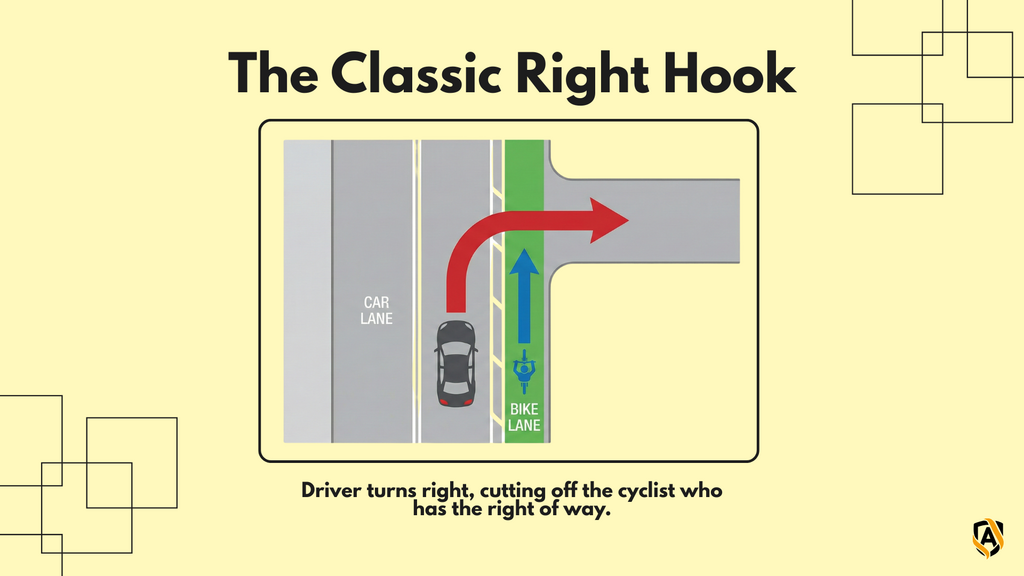
You are riding in the bike lane, heading straight. The light is green. A car to your left speeds up to pass you, then immediately slams on the brakes and turns right, cutting directly across your path.
You slam into the passenger door.
This is called the "Right Hook." It happens constantly on busy corridors like South Congress and Lamar Blvd.
The Law: The driver is almost always at fault here. Under Texas law, a vehicle turning right must yield to traffic (including bicycles) moving straight in the adjacent lane.
The Defense: The driver will say, "He came out of nowhere!" or "I was already turning."
The Strategy: We look for impact damage. If your bike hit the side of their car, it proves they cut you off. If the damage is on the rear of their car, it gets trickier. This is why preserving your damaged bike (evidence) is crucial.
The Defense: The driver will say, "He came out of nowhere!" or "I was already turning."
The Strategy: We look for impact damage. If your bike hit the side of their car, it proves they cut you off. If the damage is on the rear of their car, it gets trickier. This is why preserving your damaged bike (evidence) is crucial.
The "Dooring" Danger on South Congress
Reverse-angle parking is great in theory. But on streets like South Congress, parallel parking is still the norm.
"Dooring" happens when a driver parks and throws their door open without checking the mirror, knocking a cyclist directly into traffic.
Texas law places the duty on the person opening the door. You have the right of way.
However, insurance adjusters often argue that you should have been riding further to the left to avoid the "door zone." It is a catch-22: ride too far left, and cars honk; ride too far right, and you get doored.
However, insurance adjusters often argue that you should have been riding further to the left to avoid the "door zone." It is a catch-22: ride too far left, and cars honk; ride too far right, and you get doored.
The "Helmet Defense" (Mitigation of Damages)
This is the first thing the insurance adjuster will ask: "Were you wearing a helmet?"
In Austin, there is no city-wide law requiring adults to wear bicycle helmets. It is a personal choice.
However, just because it isn't illegal doesn't mean it won't hurt your case. Texas operates under "proportionate responsibility." The defense will argue that even if their driver caused the crash, your failure to wear a helmet made your injuries worse.
They call this "Failure to Mitigate Damages." If you suffered a broken leg, the helmet is irrelevant. But if you suffered a Traumatic Brain Injury (TBI) and weren't wearing a lid, they will fight tooth and nail to reduce your payout, claiming the damage was 50% your fault.
Where Can You Actually Ride? (Sidewalk vs. Street)
Confusion about where you are allowed to ride causes a lot of disputes.
- The Street: You have a right to the road. You generally must ride as near to the right curb as "practicable," but you can take the full lane if the lane is too narrow for a car and bike to share safely (which is true for most of Austin's older streets).
- The Sidewalk: This is tricky. In Austin, it is generally legal to ride on the sidewalk EXCEPT on specific streets, mostly downtown (like Congress Ave, 6th St, etc.).
If you were hit while riding on a sidewalk in a "prohibited zone," the insurance company will try to pin 100% of the blame on you. We have to look at the specific City of Austin ordinances map to see if you were actually in a restricted zone or just a standard sidewalk.
Bias in the Jury Box
We have to be honest about this: Not everyone likes cyclists.
Some drivers view cyclists as obstacles. When we build a case, we don't just prove the driver broke the traffic law; we have to humanize you. We have to show that you are a father, a nurse, or a student—not just "some guy in spandex" blocking traffic.
We use GPS data from apps like Strava or Garmin to show you were riding steadily and following the rules, contradicting the driver's claim that you were "weaving unpredictably."
What to Do After a Bike Crash
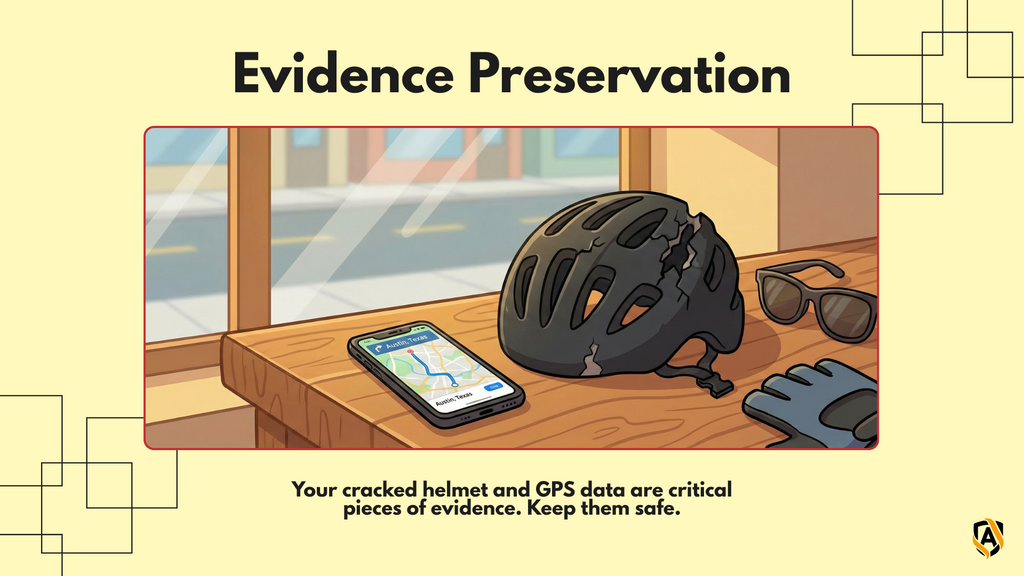
Don't Fix Your Bike Yet: Your mangled carbon fiber frame is evidence. Keep it exactly as it is.
- Keep Your Helmet: If it’s cracked, that proves the force of the impact.
- Get Witness Contacts: Pedestrians often see bike accidents better than other drivers do.
- Call a Lawyer: Cyclist injuries are rarely minor. Road rash is painful, but fractures and head injuries change your life.
You have a right to the road. Don't let an insurance company bully you into thinking you don't.
About the Author

Aaron B Mickens
For over 25 years, Aaron has fought for justice on behalf of Austin's injured. He is committed to standing up to insurance companies and winning for clients across Central Texas.
View all articles by AaronNeed Legal Help?
Contact our experienced Austin personal injury attorneys for a free consultation.