Understanding Negligent Entrustment in Texas Car Accident Cases
If someone lets another person drive their car when they know that person is unsafe, Texas law may call this negligent entrustment. This article explains what that term means in everyday language, how these claims usually work in Texas, and what people often misunderstand about them.
What Negligent Entrustment Means in Plain English
Negligent entrustment is a legal claim that says the owner of a vehicle can be responsible for a crash if they allowed an unsafe driver to use their car.
The idea is simple. If you hand your car keys to someone you know is dangerous, you may share blame for what happens.
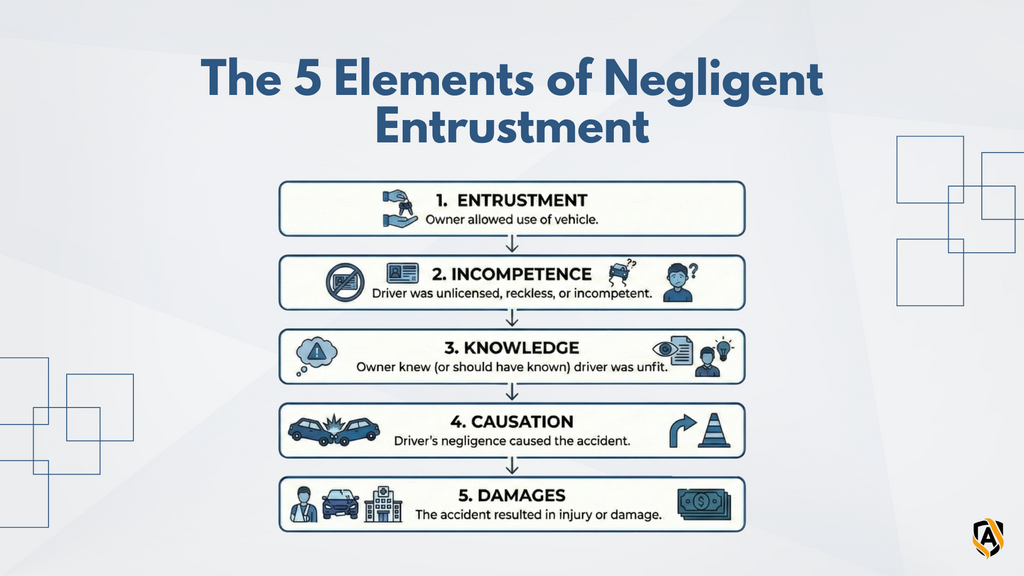
Texas courts generally look at five basic parts when someone claims negligent entrustment.
The owner let someone else drive their car.
The driver was unlicensed, reckless, or otherwise unfit to drive.
The owner knew or reasonably should have known that the driver was unsafe.
The driver caused a crash.
The crash caused injuries or property damage.
In plain terms, the question is whether the owner acted responsibly when choosing who could drive the vehicle.
Common Situations That Lead to Negligent Entrustment Claims
Here are a few simple examples of how this can show up in real life.
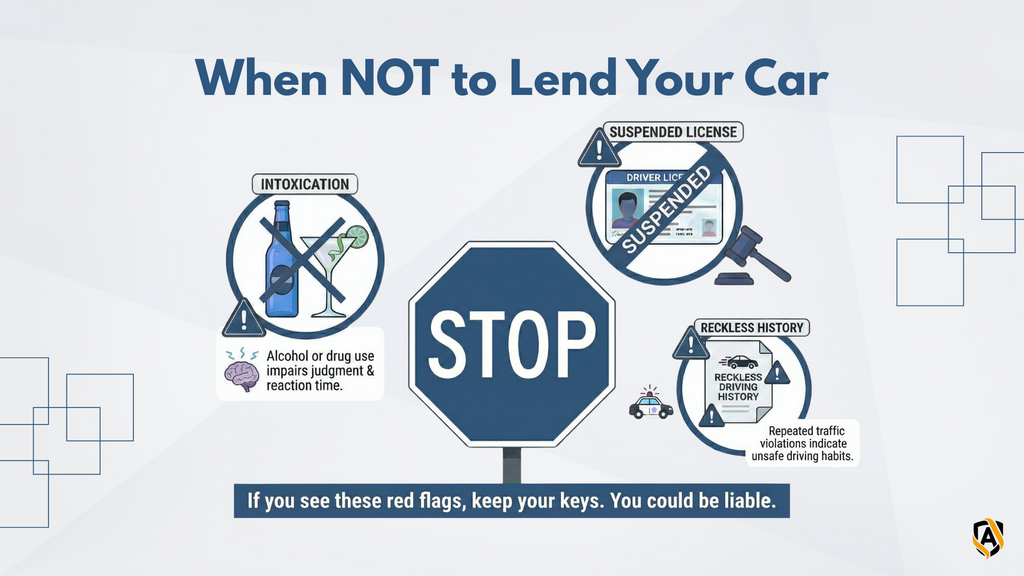
Someone knowingly gives their car to a friend who has been drinking.
A parent allows a teen with a suspended license to take the car.
A vehicle owner lets a person with a long record of dangerous driving borrow the car again.
In each of these, the claim focuses on what the owner knew at the time they handed over the keys.
How Negligent Entrustment Claims Usually Work in Texas
A typical negligent entrustment claim unfolds in a few steps.
An injured person brings a claim against the driver and also against the vehicle owner.
Insurance companies investigate who owned the car, who was driving, and what the owner knew.
Evidence may include driving records, witness statements, prior incidents, or text messages.
The case may settle, or it may continue into a lawsuit where a judge or jury decides whether the owner acted responsibly.
The person bringing the claim has to show that the owner knew or should have known the driver was unsafe. That knowledge is often the hardest part to prove.
Common Misunderstandings
Allowing someone to borrow your car is not automatically negligent entrustment. There must be evidence that the owner knew the person was unsafe.
A bad driving record alone does not always prove this claim. The question is whether the owner knew about it.
Insurance does not always cover negligent entrustment the same way it covers ordinary accidents. Policies vary, so the details matter.
When You Should Consider Talking to a Lawyer
Negligent entrustment cases can get complicated because they involve questions about insurance, responsibility, and what each person knew. It is usually a good idea to speak with a licensed Texas attorney if:
You were hurt by a driver using someone else’s car.
You are a car owner who is being blamed for allowing someone else to drive.
There is a dispute about whether the owner knew the driver was unsafe.
A lawyer can review the facts and explain your options in clear terms.
FAQs About Negligent Entrustment in Texas
Can a vehicle owner be responsible even if they were not in the car Yes. The owner does not have to be in the vehicle. The claim focuses on the owner’s decision to let the unsafe person drive. If that decision contributed to the accident, the owner may share liability.
Does the driver have to be unlicensed for negligent entrustment to apply No. An unlicensed or suspended license can be evidence of unsafe driving, but negligent entrustment can apply whenever the owner knows the driver is unfit. This can include intoxication, reckless behavior, or a history of dangerous driving.
Can insurance cover negligent entrustment claims in Texas Sometimes. Coverage depends on the policy language. Some policies cover the owner for negligent entrustment claims, and some exclude them. Reviewing the policy with a lawyer can help you understand what applies.
Is negligent entrustment the same as vicarious liability Not exactly. Vicarious liability means someone is responsible for another person’s actions simply because of a relationship, for example, an employer and employee. Negligent entrustment focuses on the owner’s own decision to trust an unsafe driver with their vehicle.
What if the owner did not know about the driver’s bad record If the owner truly did not know and had no reason to know, negligent entrustment is harder to prove. The claim depends on what was reasonable for the owner to understand at the time.
Can negligent entrustment apply to company vehicles Yes. Employers must act responsibly in choosing who can drive work vehicles. If an employer knowingly allows an unsafe employee to drive, the employer may face a negligent entrustment claim.
Final Thoughts
The main idea behind negligent entrustment is simple. Everyone has a duty to act responsibly when handing over their car keys. When someone knowingly allows an unsafe driver to use their vehicle, Texas law may hold the owner partly responsible.
Understanding these basics can help you feel more in control if you are dealing with a car accident that involves borrowed or shared vehicles. Because these cases can be fact-heavy and insurance policies are not always clear, talking with a licensed Texas attorney is often a wise step.
For over 25 years, Aaron has fought for justice on behalf of Austin's injured. He is committed to standing up to insurance companies and winning for clients across Central Texas.