Right Hook Bicycle Accidents at Intersections in Texas
Bicycle accidents at intersections are common in Austin and across Texas. One of the most dangerous and misunderstood intersection crashes is known as the right hook accident. These collisions often happen quickly, leave cyclists with serious injuries, and raise complicated questions about fault and road safety.
This article explains what a right hook bicycle accident is, why it happens so often at intersections, how Texas traffic laws apply, and what injured cyclists should understand after a crash.
What Is a Right Hook Bicycle Accident
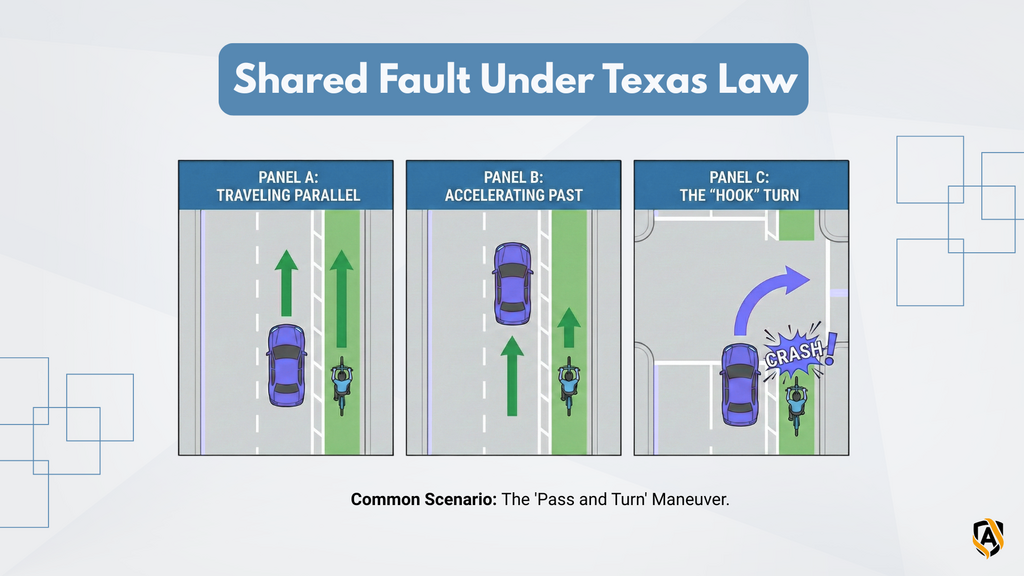
A right hook bicycle accident occurs when a motor vehicle turns right and strikes a bicyclist who is traveling straight through the intersection. In most cases, the cyclist is riding in a bike lane or along the right side of the roadway when the driver turns across the cyclist’s path.
The term right hook comes from the way the vehicle cuts in front of the cyclist, leaving little or no time to react.
Common right hook scenarios include the following:
- A driver passes a cyclist and immediately turns right at an intersection
- A driver turns right without checking mirrors or blind spots
- A driver fails to yield to a cyclist proceeding straight through a green light
- A cyclist is riding in a marked bike lane that continues through the intersection
Why Right Hook Accidents Happen at Intersections
Intersections are high conflict areas where multiple road users converge. Right hook accidents often occur because drivers are focused on vehicle traffic rather than bicycles.
Contributing factors often include:
- Failure to look for cyclists before turning
- Misunderstanding that bicycles have the same rights as vehicles
- Distracted driving
- Poorly designed intersections or faded bike lane markings
- Speed and impatience during turns
In busy areas of Austin, especially downtown and near university corridors, cyclists are frequently traveling straight while drivers are attempting quick right turns.
Texas Traffic Laws and Right Turns Near Cyclists
Under Texas law, bicycles are considered vehicles and generally have the same rights and responsibilities as motor vehicles. This includes the right to proceed straight through an intersection when the cyclist has the right of way.
Key legal principles that often apply in right hook accidents include:
- Drivers must yield to traffic already in the lane they are crossing
- Drivers turning right must do so safely and only when the turn can be made without interfering with other roadway users
- Cyclists riding in bike lanes or lawfully on the roadway are entitled to continue straight
Fault in a right hook accident depends on the specific facts, including traffic signals, lane markings, speed, and visibility. Texas follows a proportionate responsibility system, meaning fault can be shared depending on the circumstances.
Injuries Commonly Seen in Right Hook Bicycle Crashes
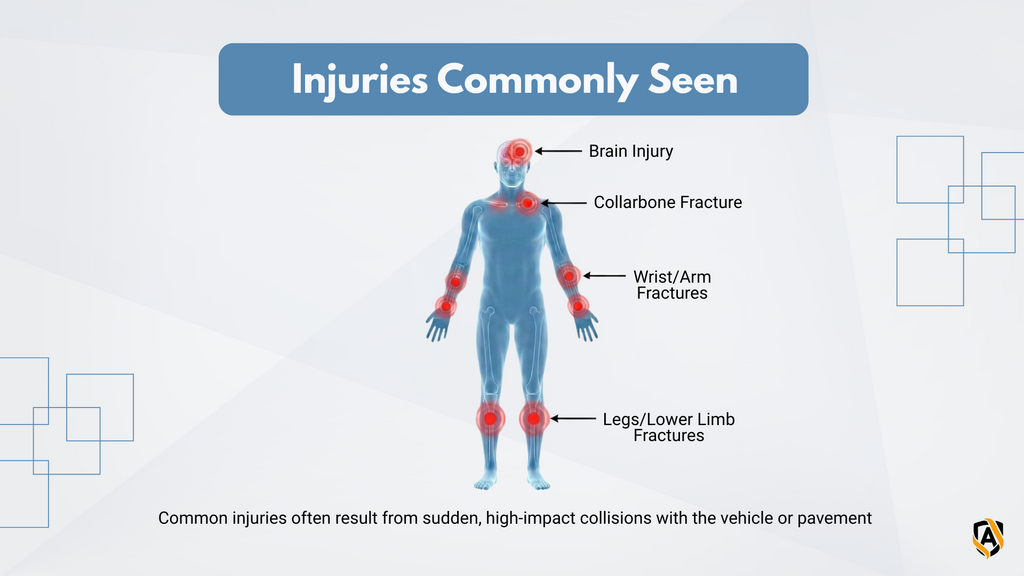
Because right hook collisions often involve sudden impacts at close range, injuries can be severe even at lower vehicle speeds.
Common injuries include:
- Broken bones, especially collarbones, arms, wrists, and legs
- Head and facial injuries
- Traumatic brain injuries
- Spinal injuries
- Soft tissue injuries such as sprains and tears
- Road rash and lacerations
Many cyclists are thrown onto the pavement or pulled under the turning vehicle, increasing the risk of serious harm.
What Cyclists Can Do to Reduce Right Hook Risks
While drivers have a legal duty to watch for cyclists, riders can take steps to improve visibility and awareness at intersections.
Safety practices often include:
- Positioning visibly rather than riding in a driver’s blind spot
- Slowing and scanning for turning vehicles at intersections
- Making eye contact with drivers when possible
- Using front and rear lights, even during daylight
- Wearing bright or reflective clothing
Infrastructure improvements such as protected bike lanes and clearer intersection markings can also help reduce right hook collisions.
What to Know After a Right Hook Bicycle Accident
After a bicycle accident at an intersection, documentation is critical. Police reports, witness statements, photos of the scene, and medical records often play an important role in understanding what happened.
Injured cyclists may face medical bills, missed work, and long recovery periods. Learning how Texas law applies to bicycle accidents can help injured riders make informed decisions about next steps.
Frequently Asked Questions
What is a right hook accident involving a bicycle
A right hook accident happens when a motor vehicle turns right and collides with a bicyclist who is traveling straight through an intersection, often from a bike lane or the right side of the road.
Who usually has the right of way in a right hook crash
In many situations, the cyclist traveling straight has the right of way, but fault depends on traffic signals, lane position, and whether each party followed traffic laws.
Are bike lanes supposed to continue through intersections in Texas
Many bike lanes are designed to continue through intersections, even if markings are less visible. Cyclists are generally allowed to proceed straight unless signage or signals indicate otherwise.
Why are right hook accidents so dangerous for cyclists
These crashes occur at close distances with little warning. Cyclists are often struck or knocked down directly in front of a turning vehicle, increasing the risk of serious injury.
Do right hook accidents happen only at busy intersections
No. Right hook accidents can happen at any intersection, including residential streets, especially where drivers are not expecting cyclists.
About the Author

Aaron B Mickens
For over 25 years, Aaron has fought for justice on behalf of Austin's injured. He is committed to standing up to insurance companies and winning for clients across Central Texas.
View all articles by AaronNeed Legal Help?
Contact our experienced Austin personal injury attorneys for a free consultation.