
Settlement Negotiation Timeline: What to Expect in a Texas Injury Case
If you were injured in Texas and are preparing for a possible settlement, it helps to understand how the negotiation timeline usually works. This article explains the common stages, what typically happens at each one, and how long many people wait before seeing progress. The goal is to give you a clear picture of the process in calm, plain language.
What Settlement Negotiation Means in a Texas Injury Case
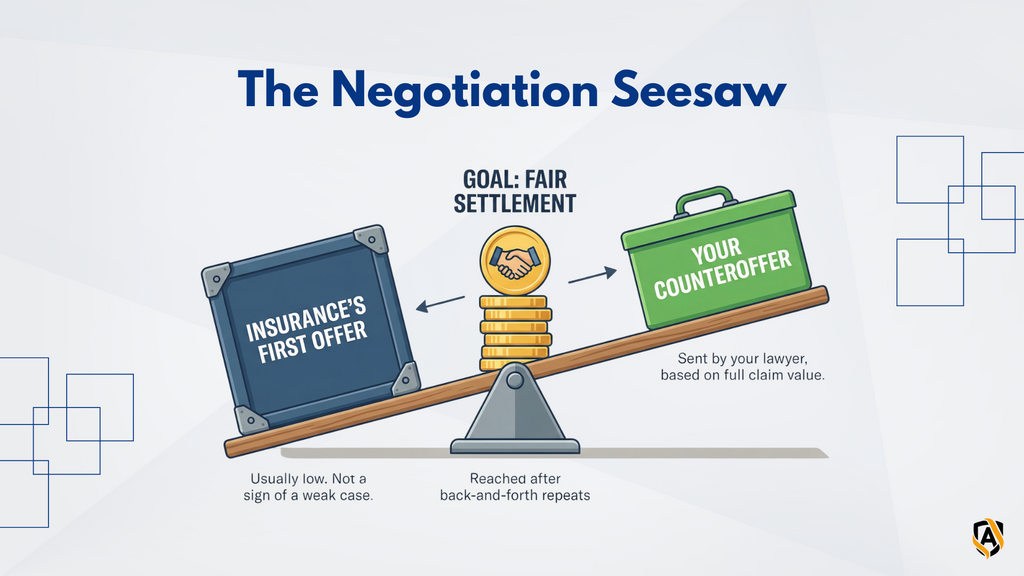
A settlement is an agreement between the injured person and the insurance company to resolve the claim without going to trial. In simple terms, it is both sides agreeing on a dollar amount that closes the case.
Many injury claims in Texas end in a settlement. Even so, the timeline can vary because every case has different injuries, treatment plans, insurance companies, and facts. Think of settlement as a series of conversations rather than one big moment.
Typical Stages of a Texas Settlement Timeline
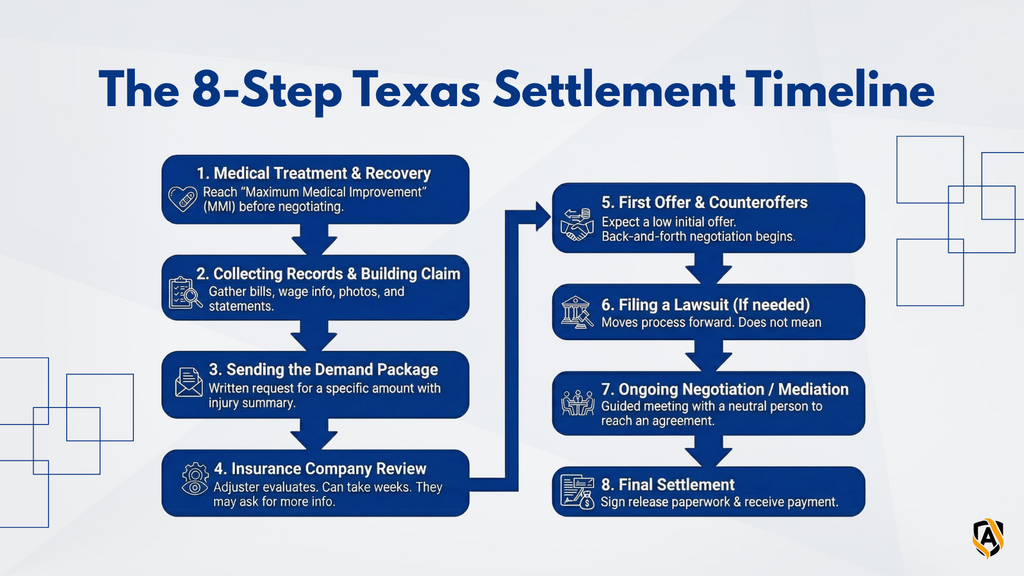
1. Medical Treatment and Recovery Period
Before serious negotiations begin, most lawyers wait until you reach what doctors call maximum medical improvement. This means your medical team believes you have healed as much as you reasonably can.
Reason: It is hard to estimate the true value of a case until doctors know your long term outcome.
Reason: It is hard to estimate the true value of a case until doctors know your long term outcome.
2. Collecting Records and Building the Claim
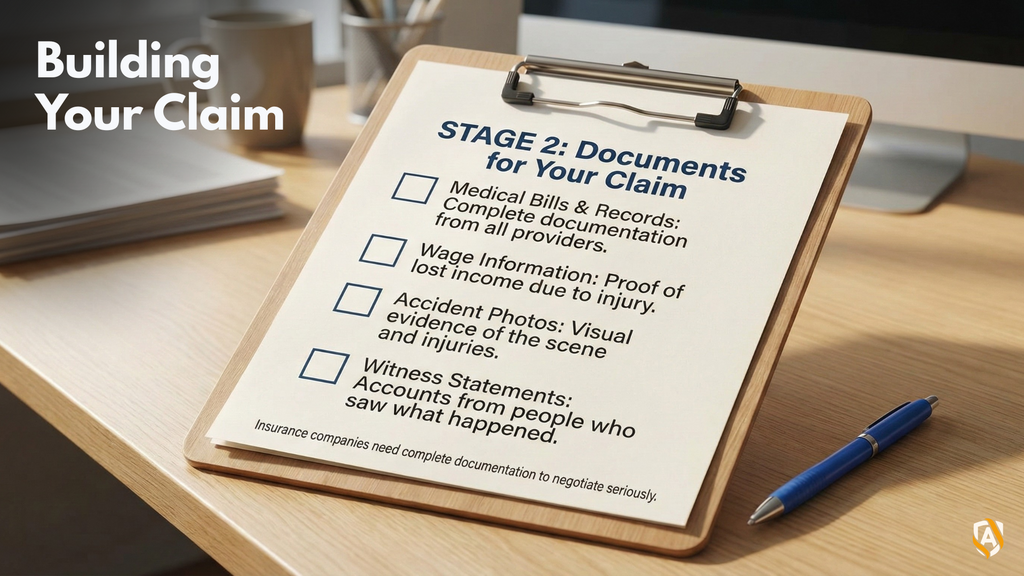
Your medical bills, records, wage information, photos, and witness statements are gathered. This often takes time because medical providers move at their own pace.
Insurance companies usually want complete documentation before they seriously negotiate.
Insurance companies usually want complete documentation before they seriously negotiate.
3. Sending the Demand Package
A demand letter is a written request for a specific settlement amount, plus a summary of your injuries and damages. In plain language, it tells the insurance company what happened, how you were hurt, and what you are asking for.
4. The Insurance Company Review
Once the demand is sent, insurance adjusters review the materials. This can take several weeks.
They may ask questions, request more records, or say they need internal approval.
They may ask questions, request more records, or say they need internal approval.
5. First Offer and Counteroffers
The first offer from an insurance company is usually low. This is normal and not a sign that your case is weak.
Your lawyer, if you have one, typically sends a counteroffer. The back and forth can repeat several times until both sides either reach an agreement or hit a wall.
Your lawyer, if you have one, typically sends a counteroffer. The back and forth can repeat several times until both sides either reach an agreement or hit a wall.
6. Filing a Lawsuit if Needed
If the insurance company refuses to negotiate fairly, many lawyers file a lawsuit. Filing does not mean the case will go to trial. It simply moves the process forward and often brings the insurance company back to the table.
7. Ongoing Negotiation
Even after a lawsuit is filed, negotiations continue. Many Texas injury cases settle during discovery or mediation.
Discovery is the information sharing stage of a lawsuit. Mediation is a guided meeting with a neutral person who helps both sides work toward an agreement.
Discovery is the information sharing stage of a lawsuit. Mediation is a guided meeting with a neutral person who helps both sides work toward an agreement.
8. Final Settlement
If both sides agree, the settlement is put in writing. You sign release paperwork, and the insurance company sends payment.
In many Texas cases, payment arrives within a few weeks after all documents are completed.
In many Texas cases, payment arrives within a few weeks after all documents are completed.
What Can Delay a Settlement
Several common issues can slow down the timeline.
- Ongoing medical treatment
- Slow responses from medical providers
- Insurance company backlog
- Disagreements about fault
- Serious injuries with high-dollar claims
- Requests for more documentation
- Lawsuit scheduling requirements
Delays can be frustrating, but they are normal. A careful timeline usually protects the injured person by making sure the claim is complete and accurate.
Common Misunderstandings About Settlement Timelines
Misunderstanding 1. Many people think insurance companies must respond quickly. In reality, there is no universal deadline, although unreasonable delays may be challenged.
Misunderstanding 2. Some believe filing a lawsuit means a trial is certain. Most Texas injury lawsuits still settle before trial.
Misunderstanding 3. A low first offer does not mean the case is hopeless. It is simply part of the negotiation pattern.
When to Consider Talking to a Texas Injury Lawyer
You may want to talk with a lawyer when:
- Your injuries are serious
- The insurance company keeps delaying
- You are being blamed for something you did not do
- You are not sure how to value your claim
- You feel pressured to accept a quick offer
A Texas lawyer can help identify fair ranges based on your specific facts and Texas law.
Final Thoughts
Understanding the settlement timeline can take a lot of stress out of a Texas injury claim. The process usually moves through treatment, documentation, negotiation, and sometimes a lawsuit before reaching a final agreement. Delays are common, but they often protect the injured person by making sure the full picture is known.
If you are dealing with this situation now, it is often helpful to speak with a licensed attorney in your area who can review your specific facts.
This article is for general educational purposes only and is not legal advice. Laws change, and how they apply can depend on your specific situation. Talk to a licensed attorney in your state, and in Texas if your issue is in Texas, for advice about your particular case.
About the Author

Aaron B Mickens
For over 25 years, Aaron has fought for justice on behalf of Austin's injured. He is committed to standing up to insurance companies and winning for clients across Central Texas.
View all articles by AaronNeed Legal Help?
Contact our experienced Austin personal injury attorneys for a free consultation.