Lane Filtering Debate: Safety vs. Legality in Texas
Lane filtering is one of the most debated motorcycle topics in Texas. Riders often argue it improves safety and reduces congestion. Lawmakers and law enforcement point to existing traffic laws that make the practice unlawful on most Texas roads. Understanding both sides of the debate helps riders and drivers know what the law currently allows and why the issue remains controversial.
What Is Lane Filtering
Lane filtering generally means a motorcycle moving between lanes of slow or stopped traffic, usually at low speeds such as at traffic lights or during congestion. It is different from lane splitting, which often refers to riding between lanes at higher speeds on highways. Texas law does not formally define either term, which adds to the confusion.
Is Lane Filtering Legal in Texas
Under current Texas Transportation Code provisions, lane filtering is not expressly permitted. Motorcycles are required to operate within a single lane and are subject to the same lane use rules as passenger vehicles. Because of this, law enforcement typically treats lane filtering as an improper lane change or failure to maintain a single lane.
In practical terms, this means lane filtering is generally considered illegal on Texas roads, even at low speeds or while traffic is stopped.
The Safety Argument in Favor of Lane Filtering
Supporters of lane filtering point to several commonly cited safety considerations:
- Reduced risk of rear end collisions when motorcycles are not stopped between cars
- Lower engine heat exposure in hot Texas traffic conditions
- Improved traffic flow by reducing congestion at intersections
Studies from jurisdictions where lane filtering is allowed often note fewer rear impact crashes involving motorcycles under controlled conditions. Advocates argue these benefits are especially relevant in urban areas like Austin with frequent stop and go traffic.
The Legal and Enforcement Concerns
Opponents focus on enforcement consistency and roadway safety concerns:
- Drivers may not expect motorcycles between lanes
- Limited lane width on many Texas roads
- Difficulty setting safe speed or traffic condition thresholds
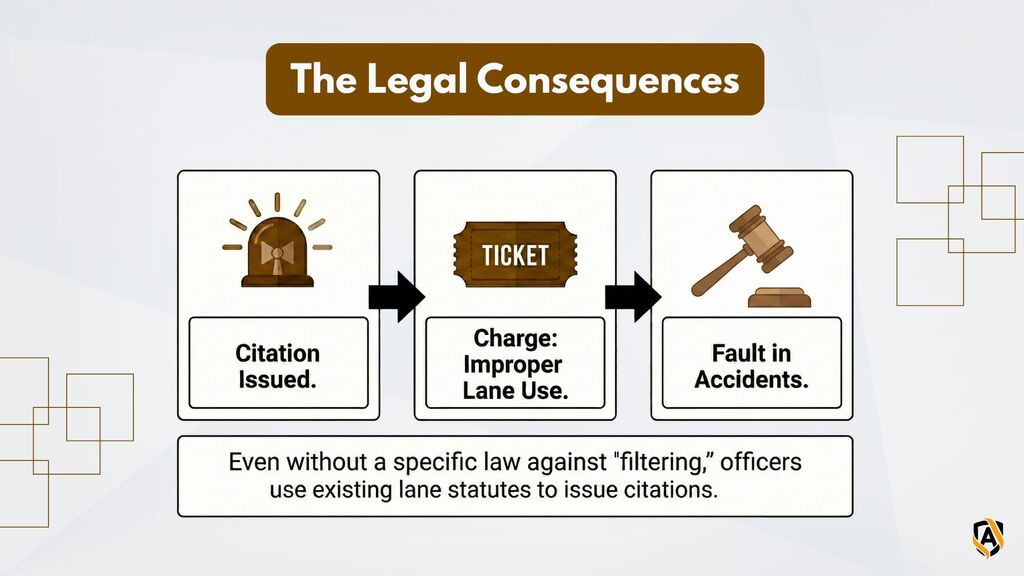
Without clear statutory rules, officers must rely on general traffic laws, which can result in citations even when no collision occurs. Lawmakers have expressed concern that partial legalization without detailed guidelines could create more confusion than clarity.
Legislative Efforts in Texas
Texas lawmakers have introduced bills in recent legislative sessions aimed at allowing limited lane filtering under specific conditions, such as low speeds and stopped traffic. As of now, none have passed into law. Each proposal has reignited debate among rider groups, safety advocates, and transportation officials.
What This Means After a Motorcycle Crash
When a collision involves a motorcyclist who was lane filtering, the legality of the maneuver can become a key issue in determining fault. Insurance adjusters and investigators often examine whether traffic laws were followed at the time of the crash. Because lane filtering is not currently authorized in Texas, this factor may be raised during claim evaluations.
Key Takeaways for Texas Riders and Drivers
- Lane filtering is generally not legal in Texas under current law
- Safety benefits are debated but not codified in statute
- Legislative proposals continue but have not yet changed the law
- Legal consequences can arise even in low speed traffic situations
Looking Ahead
The lane filtering debate in Texas reflects a broader national discussion about balancing motorcycle safety, traffic efficiency, and roadway predictability. Until the law changes, the legal status remains the same, even as public opinion and research continue to evolve.
Frequently Asked Questions
Is lane filtering legal for motorcycles in Texas
Lane filtering is not expressly permitted under Texas law. Motorcycles are generally required to remain within a single lane, and riding between lanes of traffic is commonly treated as a traffic violation.
Is there a difference between lane filtering and lane splitting in Texas
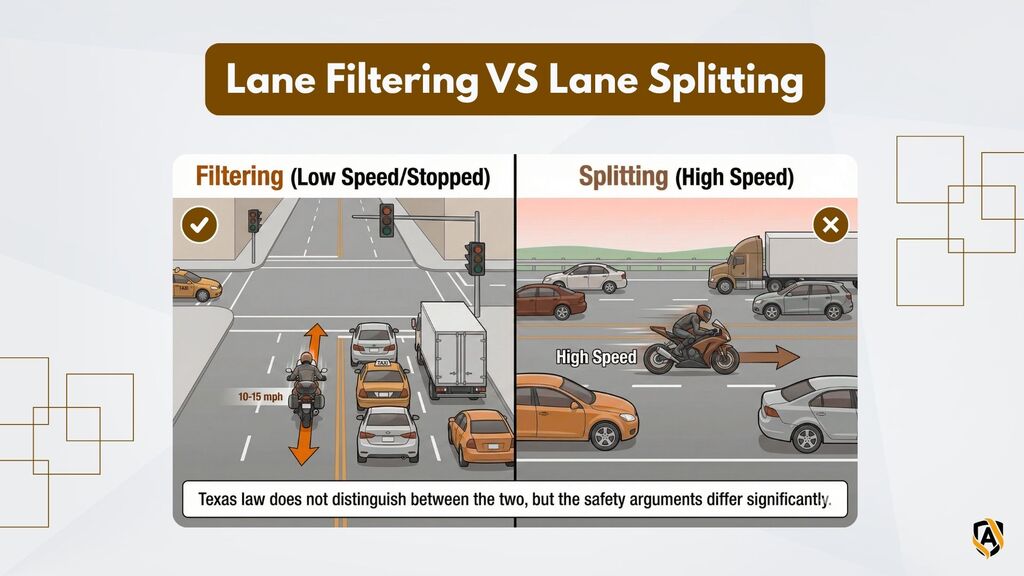
Texas law does not formally define lane filtering or lane splitting. In practice, both terms usually refer to a motorcycle traveling between lanes of traffic and are treated the same under current enforcement standards.
Can a motorcyclist be ticketed for lane filtering at a red light
Yes. Even when traffic is stopped at a red light, a motorcyclist may receive a citation for lane filtering based on improper lane usage or failure to maintain a single lane.
Have any Texas laws been proposed to allow lane filtering
Yes. Several bills have been introduced in recent legislative sessions that would allow limited lane filtering under specific conditions. None have been enacted into law as of now.
Does lane filtering affect fault after a motorcycle crash in Texas
Lane filtering may be considered when fault is evaluated after a crash. Because the practice is not currently authorized, it can be raised as a factor during insurance investigations or legal claims.
About the Author

Aaron B Mickens
For over 25 years, Aaron has fought for justice on behalf of Austin's injured. He is committed to standing up to insurance companies and winning for clients across Central Texas.
View all articles by AaronNeed Legal Help?
Contact our experienced Austin personal injury attorneys for a free consultation.