Crane Collapse Injuries: Liability in a Growing Skyline
The Austin construction boom brings unprecedented growth and significant risk. The construction industry is projected to add 380,100 new jobs by 2033, driving increased crane usage. Yet crane accidents claim an average of 42 lives annually, with 43% occurring in private construction. When cranes fail, multiple parties beyond your employer can be held liable.
The Growing Threat of Crane Collapses
Mobile and truck cranes account for 71% of fatal crane incidents, making them the deadliest equipment type on construction sites. Federal investigators identified 838 OSHA violations across 249 crane incidents resulting in 133 deaths. Human error drives over 90% of these accidents. Men comprise 98.7% of victims. In 2024 alone, seven fatal overhead crane incidents occurred between January and July, demonstrating that despite improved regulations, workplace crane dangers persist.
Common Causes of Crane Failures
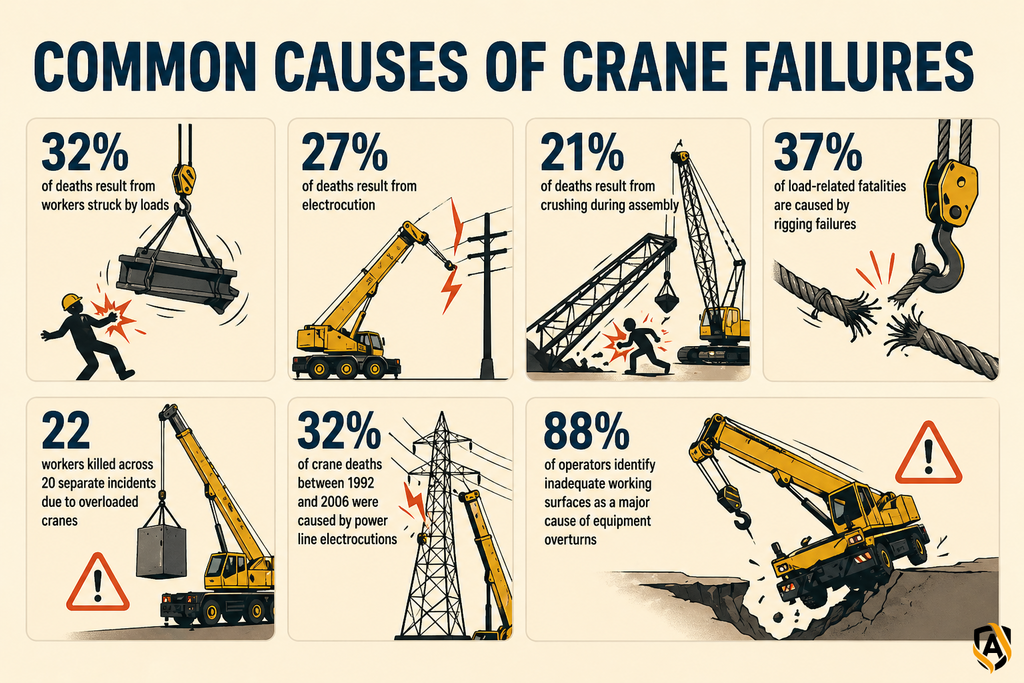
Crane accidents follow predictable patterns. OSHA data shows 32% of deaths result from workers struck by loads, 27% from electrocution, and 21% from crushing during assembly. Rigging failures cause 37% of load-related fatalities. Overloaded cranes killed 22 workers across 20 separate incidents. Power line electrocutions accounted for 32% of crane deaths between 1992 and 2006. Most troubling, 88% of operators identify inadequate working surfaces as a major cause of equipment overturns.
Federal Safety Regulations and Operator Requirements
29 CFR 1926 Subpart CC governs all construction cranes, requiring strict compliance. Since November 2018, operator certification has been mandatory through accredited testing organizations, audited employer programs, state licensing, or military qualification. Certifications remain valid for five years. Equipment requires shift inspections before each use, monthly operational reviews, and annual comprehensive inspections. Prime contractors bear overall OSHA compliance responsibility. The multi-employer citation policy allows OSHA to cite up to four employer categories.
Who Can Be Held Liable in Crane Collapse Cases
Liability extends far beyond the worker's direct employer. General contractors maintain overall OSHA responsibility as controlling employers. Subcontractors face claims for defective materials and safety failures. Crane operators caused 22% of fatal incidents through overloading or improper setup. Rental companies face negligent lease claims.
Manufacturers bear product liability for defects and inadequate warnings. Property owners become liable when unsafe site conditions contribute to accidents. Each defendant typically carries separate insurance, creating multiple compensation sources for wrongful death claims.
Manufacturers bear product liability for defects and inadequate warnings. Property owners become liable when unsafe site conditions contribute to accidents. Each defendant typically carries separate insurance, creating multiple compensation sources for wrongful death claims.
Legal Theories of Liability
Multiple legal frameworks establish crane accident liability. Negligence claims require proving duty, breach, causation, and damages. Strict liability applies to ultrahazardous construction activities. Nine state high courts and three federal circuits recognize OSHA violations as negligence per se, automatically establishing breach.
Most states allow OSHA violations as admissible evidence of negligence. Product liability follows three categories: manufacturing defects, design defects, and failure-to-warn claims. Contractual indemnification allows risk shifting between parties.
Most states allow OSHA violations as admissible evidence of negligence. Product liability follows three categories: manufacturing defects, design defects, and failure-to-warn claims. Contractual indemnification allows risk shifting between parties.
Third-Party Claims Beyond Workers' Compensation
Workers' compensation typically serves as the exclusive remedy against employers. However, five exceptions exist: dual capacity doctrine, uninsured employer situations, intentional tort, fraudulent concealment, and employment law violations.
Third-party liability claims against non-employer defendants unlock substantially greater compensation including pain and suffering damages, future lost earnings, and emotional distress. A New York jury awarded $96 million to families of two workers killed in a 2008 tower crane collapse. Another crane operator received $25 million after falling 12 feet.
Third-party liability claims against non-employer defendants unlock substantially greater compensation including pain and suffering damages, future lost earnings, and emotional distress. A New York jury awarded $96 million to families of two workers killed in a 2008 tower crane collapse. Another crane operator received $25 million after falling 12 feet.
Decision Framework: Evaluating Your Legal Options
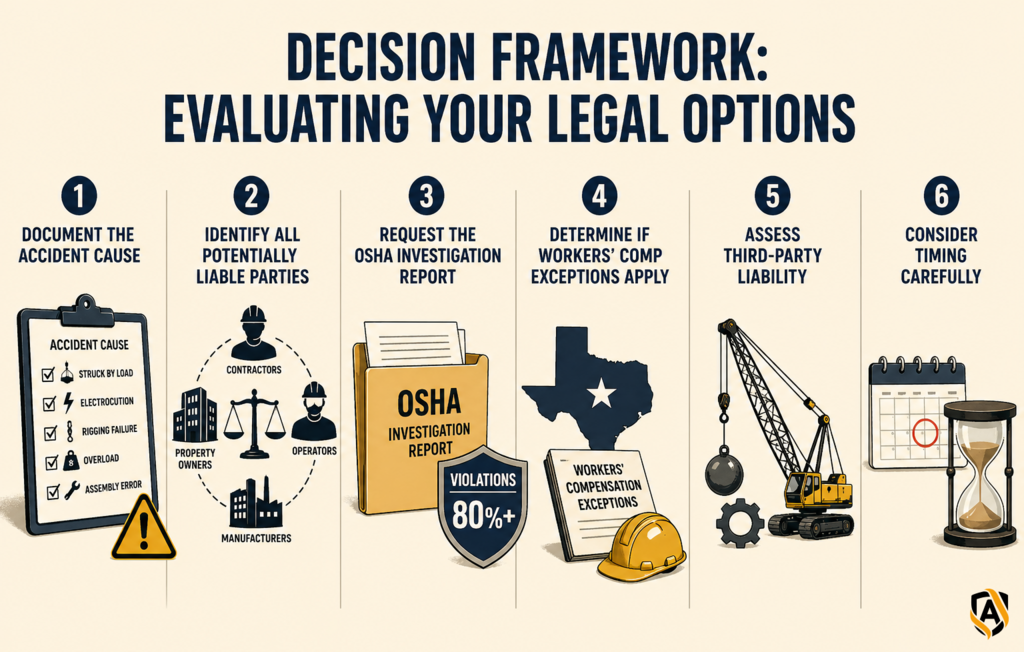
Assessing your crane accident claim requires systematic analysis. First, document the accident cause-struck by load, electrocution, rigging failure, overload, or assembly error. Second, identify all potentially liable parties including contractors, operators, manufacturers, and property owners. Third, request the OSHA investigation report, as violations appear in over 80% of investigated incidents.
Fourth, determine if workers' compensation exceptions apply. Texas allows non-subscriber employers to be sued directly for negligence, creating unique opportunities. Fifth, assess third-party liability based on equipment defects or dangerous property conditions. Finally, consider timing carefully as statutes of limitations vary-settlement negotiations in crane cases are complex and time-sensitive.
Conclusion
Construction expansion continues driving crane use upward. The projected addition of 380,100 jobs through 2033 will increase worker exposure to crane hazards. When OSHA violations appear in most investigated incidents, negligence becomes the norm.
Multi-million dollar verdicts demonstrate that significant compensation exists beyond limited workers' comp benefits. Navigating multi-party liability, federal regulations, and insurance coverage requires specialized legal expertise in construction site litigation.
Multi-million dollar verdicts demonstrate that significant compensation exists beyond limited workers' comp benefits. Navigating multi-party liability, federal regulations, and insurance coverage requires specialized legal expertise in construction site litigation.
Frequently Asked Questions
Can I sue if I'm covered by workers' compensation?
Yes, through third-party claims against non-employer defendants like equipment manufacturers, crane rental companies, subcontractors, or property owners. Workers' compensation only bars lawsuits against your direct employer in most cases.
What makes Texas crane accident cases different from other states?
Texas allows non-subscriber employers who opt out of workers' compensation to be sued directly for negligence. This eliminates the exclusive remedy doctrine and permits full civil damages including pain and suffering against your employer.
How do OSHA violations affect my crane accident case?
OSHA violations serve as powerful evidence of negligence in court. Nine states recognize violations as negligence per se, automatically establishing liability. Most other states admit OSHA violations as proof the defendant breached safety duties.
Who pays when multiple parties are liable for a crane collapse?
Each liable party typically carries separate insurance policies. Defendants may share liability through joint and several liability or comparative fault principles, but plaintiffs can often recover the full judgment from any defendant with available insurance coverage.
How long do I have to file a crane accident claim in Texas?
Texas imposes a two-year statute of limitations for personal injury claims and wrongful death cases from the date of the accident. However, exceptions exist for delayed discovery, and different time limits may apply to product liability or workers' compensation claims.
About the Author

Aaron B Mickens
For over 25 years, Aaron has fought for justice on behalf of Austin's injured. He is committed to standing up to insurance companies and winning for clients across Central Texas.
View all articles by AaronNeed Legal Help?
Contact our experienced Austin personal injury attorneys for a free consultation.