Wet Floor Signs: Do They Absorb All Liability?
Slip and fall accidents are among the most common premises liability claims in Texas. Many of these incidents happen in grocery stores, restaurants, apartment complexes, and office buildings where floors are recently mopped or spills occur. When a business places a wet floor sign, people often assume that the sign automatically protects the property owner from responsibility. That assumption is not always accurate.
Understanding how wet floor signs affect liability under Texas law can help injured people better understand their rights and what factors may matter after a fall. According to the National Safety Council, slips, trips, and falls are a leading cause of unintentional injuries in the United States.
What Is a Wet Floor Sign Meant to Do?
A wet floor sign is intended to warn people about a temporary hazard such as freshly cleaned floors or a spill that has not yet been removed. From a legal perspective, the sign is meant to reduce the risk of harm by alerting visitors to a potential danger. Property owners must also ensure their facilities comply with safety standards, including the ADA Standards for Accessible Design, which address floor surface safety and slip resistance.
In premises liability cases, warnings are one part of a broader duty that property owners and occupiers owe to people lawfully on their property. A sign alone does not automatically eliminate that duty.
The Duty of Care Under Texas Premises Liability Law
Texas law generally requires property owners and occupiers to use reasonable care to protect invitees from unreasonably dangerous conditions, as outlined in Texas Civil Practice and Remedies Code. This duty often includes:
- Regular inspection of the property
- Timely cleanup of spills or hazards
- Providing adequate warnings when hazards cannot be immediately fixed
A wet floor sign may help satisfy the warning portion of this duty, but it does not address whether the hazard was handled reasonably overall. Similar principles apply in other property-related injury cases, such as swimming pool accidents in apartments and hotels in Texas and Airbnb and VRBO injury liability in Texas.
Why a Wet Floor Sign Does Not Automatically Eliminate Liability
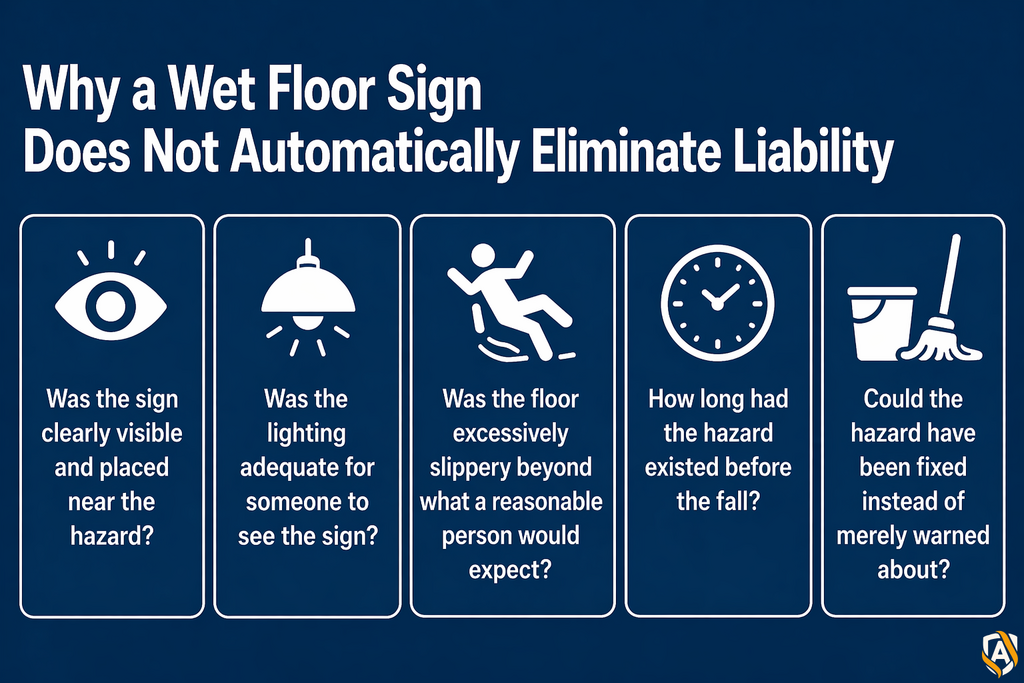
A wet floor sign does not absorb all liability because liability depends on multiple factors, not just the presence of a warning. Courts may consider questions such as:
- Was the sign clearly visible and placed near the hazard?
- Was the lighting adequate for someone to see the sign?
- Was the floor excessively slippery beyond what a reasonable person would expect?
- How long had the hazard existed before the fall?
- Could the hazard have been fixed instead of merely warned about?
If a spill remained on the floor for an unreasonable amount of time or if the sign was poorly placed, a property owner may still be found negligent. The CDC's STEADI initiative provides data showing that environmental hazards like wet floors contribute significantly to fall-related injuries.
Comparative Fault and Shared Responsibility in Texas
Texas follows a modified comparative fault system. This means responsibility for an accident can be shared between the injured person and the property owner.
If a jury finds that an injured person ignored a clearly visible wet floor sign, their percentage of fault may increase. However, this does not automatically bar a claim. Recovery is still possible as long as the injured person is not found to be more than 50 percent responsible for the incident.
Common Situations Where Liability Is Still Disputed
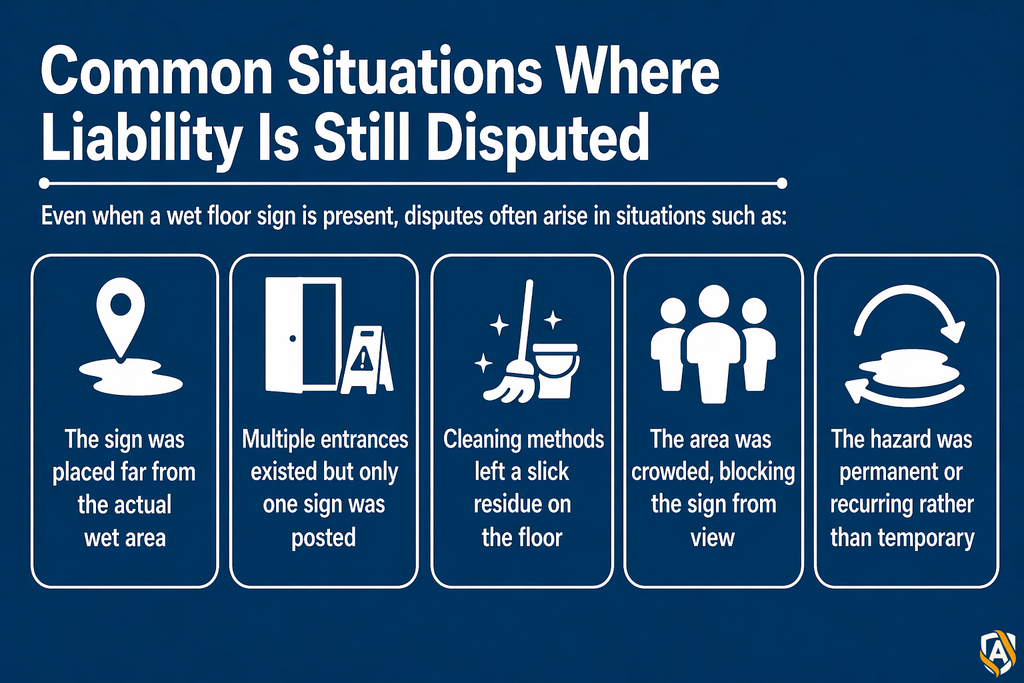
Even when a wet floor sign is present, disputes often arise in situations such as:
- The sign was placed far from the actual wet area
- Multiple entrances existed but only one sign was posted
- Cleaning methods left a slick residue on the floor
- The area was crowded, blocking the sign from view
- The hazard was permanent or recurring rather than temporary
These fact specific details often determine whether a property owner acted reasonably under the circumstances. Similar considerations apply in cases involving uneven sidewalks and suing the City of Austin and parking lot pedestrian accidents.
Property owners also have obligations to maintain safe premises in commercial settings, as demonstrated in cases of negligent security and assaults at Austin bars and venues. The OSHA guidelines on preventing slips, trips, and falls emphasize that businesses must take proactive measures beyond simply posting warning signs.
What to Do After a Slip and Fall on a Wet Floor
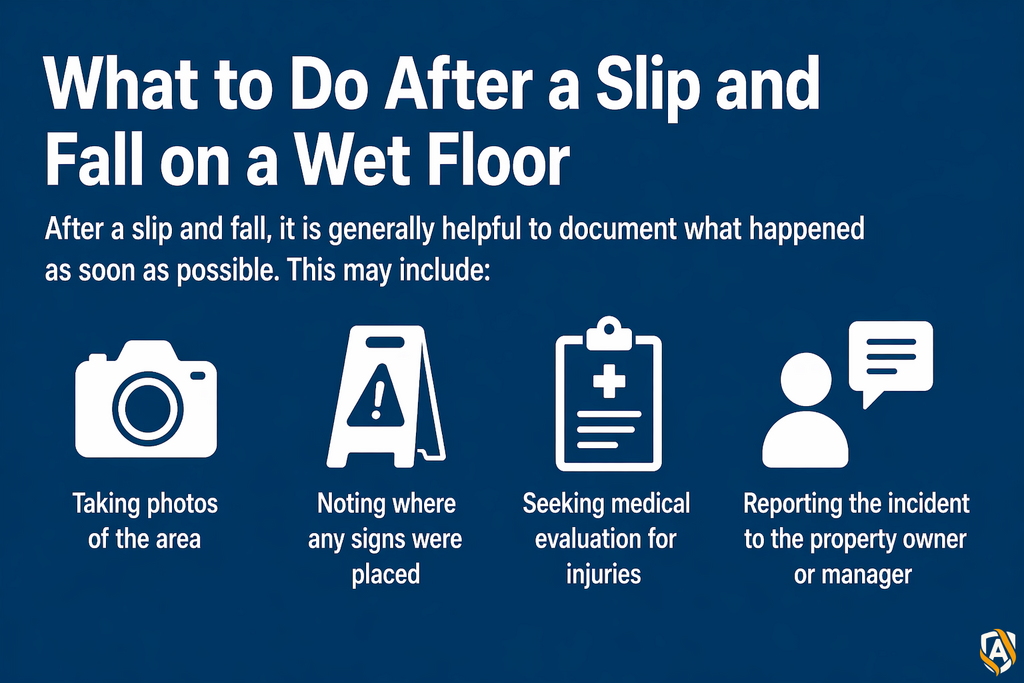
After a slip and fall, it is generally helpful to document what happened as soon as possible. This may include taking photos of the area, noting where any signs were placed, and seeking medical evaluation for injuries. Reporting the incident to the property owner or manager can also create a record of the event.
Each case is unique, and liability is rarely decided by a single factor like a warning sign. Understanding property damage claims in Texas can also be helpful if personal property was damaged during the fall.
Frequently Asked Questions
Does a wet floor sign automatically protect a business from liability in Texas?
A wet floor sign is only one factor in determining liability" under Texas premises liability law.
Can I still have a claim if I saw the wet floor sign before falling?
Yes. Visibility, hazard severity, and whether the condition could have been corrected rather than merely warned about remain relevant considerations.
What if the wet floor sign was not near the area where I fell?
If the sign did not reasonably warn of the specific hazard, it may not effectively reduce liability.
How long can a floor stay wet before it becomes unreasonable?
There is no set time limit. Reasonableness depends on factors such as foot traffic, location, and available cleanup methods.
Are wet floor signs required by Texas law?
Texas law does not specifically require wet floor signs, but property owners must take reasonable steps to warn of or correct dangerous conditions.
About the Author

Aaron B Mickens
For over 25 years, Aaron has fought for justice on behalf of Austin's injured. He is committed to standing up to insurance companies and winning for clients across Central Texas.
View all articles by AaronNeed Legal Help?
Contact our experienced Austin personal injury attorneys for a free consultation.