Elevator and Escalator Accidents in Austin Malls: What You Need to Know About Your Legal Rights
According to CDC NIOSH research, elevator and escalator accidents kill approximately 30-31 people annually and cause 17,000 serious injuries nationwide. Hospital-treated injuries jumped 30% from 19,000 in 2007 to 25,000 in 2017. Austin's major malls-Barton Creek Square, Lakeline Mall, and The Domain-all feature multi-level systems where malfunctions cause devastating injuries. Recent local incidents include 20 people rescued from a stalled elevator in August 2024 and two workers trapped downtown in July 2025. When these systems fail, property owners bear legal responsibility.
Understanding the Scope of the Problem in Texas
Texas faces a serious elevator safety crisis. State data reveals 5,617 elevators (14% of all units) are overdue for required yearly inspections. While escalators are more numerous, CDC research shows elevators cause 90% of deaths and 60% of serious injuries. According to Consumer Product Safety Commission data, 90% of escalator incidents involve falls, while 10% result from entrapment. Austin malls feature Montgomery Hydraulic Elevators at Barton Creek Square and Lakeline Mall's Macy's. Barton Creek Square's elevator has been reported out of service during recent visits, creating accessibility hazards for wheelchair users and parents with strollers. The Texas Department of Licensing and Regulation (TDLR) maintains a searchable database to verify inspection compliance.
Common Causes of Elevator and Escalator Malfunctions
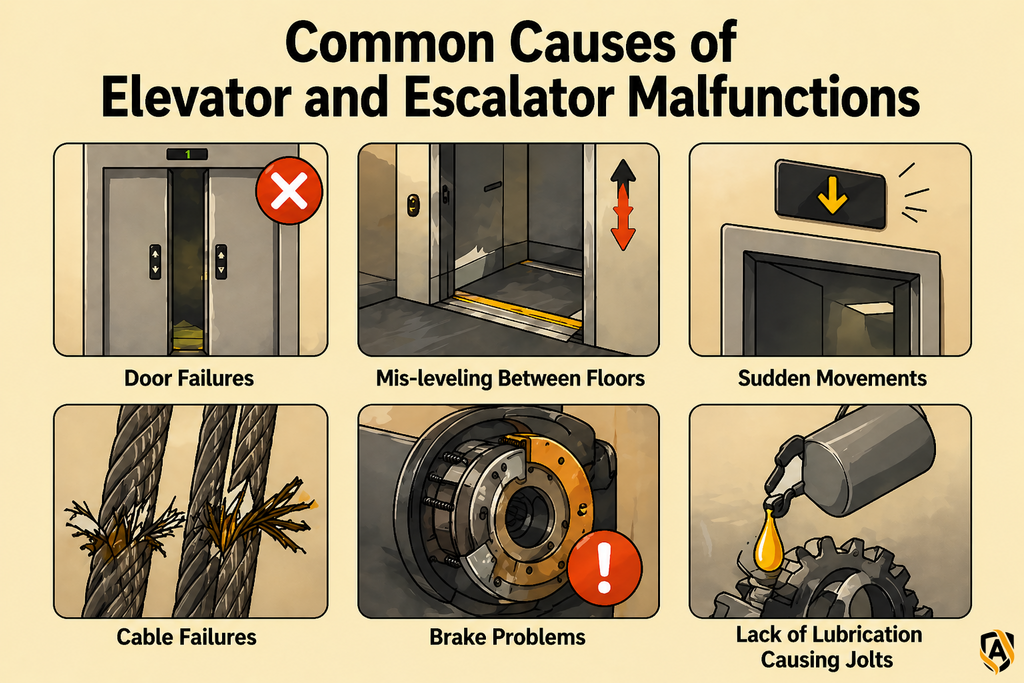
Poor maintenance is the number one cause of elevator accidents. Negligent owners stretch inspection intervals beyond three years despite Texas requiring annual inspections. Common malfunctions include door failures, mis-leveling between floors, sudden movements, cable failures, brake problems, and lack of lubrication causing jolts. Escalator hazards include loose clothing or shoelaces trapped in moving parts and sidewall entrapment-particularly dangerous for children. Recent incidents illustrate severe consequences: a February 2025 Otis elevator in Kunming killed one person due to metal shards in the drum brake. A December 2023 Stockholm construction elevator collapse killed five after missing bolts. These tragedies show proper maintenance and inspections aren't optional-they're life-saving requirements.
Who is Most Vulnerable? High-Risk Groups
Certain populations face dramatically higher risks. Children account for 2,000 annual escalator injuries, averaging 6.5 years old. Medical research shows 36.5% of injuries in children under 5 result from entrapment, with devastating consequences: 50% require hospitalization, 46% suffer permanent cosmetic deformities, and 15% experience significant functional loss. The elderly face serious risks-90% of escalator incidents involve seniors or small children, with 40,000 elderly adults injured between 1991-2005. Construction and maintenance workers face highest occupational danger: 145 deaths occurred between 2011-2016. Elevator installers experience fatality rates 50 times higher than average construction workers. Wheelchair users and parents with strollers face heightened risks when elevators malfunction or remain out of service.
Texas Regulatory Framework and Inspection Failures
The Texas Department of Licensing and Regulation mandates annual inspections for all elevators and escalators. Texas adopts ASME A17.1-2016 and CSA B44-16 safety codes as minimum standards. Property owners must obtain inspections every 12 months and submit reports within 60 days for compliance certificates. Violations carry fines: first offenses up to $1,000, third violations $1,000-$3,000. These modest penalties prove insufficient-14% of Texas elevators remain overdue for inspections, showing widespread non-compliance. Concerned residents can access TDLR's searchable database at tdlr.texas.gov to verify inspection status, providing transparency about equipment safety. This public information proves crucial evidence in premises liability claims.
Legal Liability: Who Can Be Held Responsible?
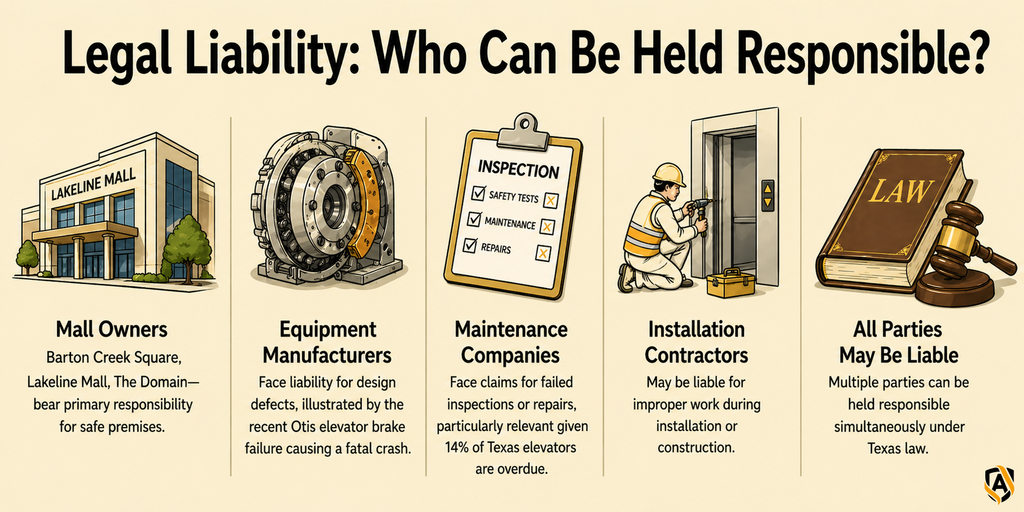
Texas premises liability law holds property owners and managers responsible for injuries from hazardous conditions. Multiple parties can be liable simultaneously. Mall owners-Barton Creek Square, Lakeline Mall, The Domain-bear primary responsibility for safe premises. Equipment manufacturers face liability for design defects, illustrated by the recent Otis elevator brake failure causing a fatal crash. Maintenance companies face claims for failed inspections or repairs, particularly relevant given 14% of Texas elevators are overdue. Installation contractors may be liable for improper work. To establish negligence under Texas comparative negligence law, injured parties must prove: property owner's duty to maintain safe premises, breach by ignoring hazards or failing maintenance, breach directly caused injuries, and owner knew or should have known about the dangerous condition. The 14% inspection failure rate provides strong evidence of negligence.
Your Legal Rights and Time Limits in Texas
Texas imposes a two-year statute of limitations for personal injury claims under Texas Civil Practice and Remedies Code § 16.003. The clock starts from your accident date, and failure to file within two years means permanent loss of compensation rights. Important exceptions exist: for minors, the clock starts at age 18; the discovery rule applies for inherently undiscoverable injuries; mental incapacity pauses the clock. Immediate documentation proves critical. Photograph injuries, the accident scene, and equipment. Collect witness information. Obtain medical records. Request inspection history from the TDLR database-overdue or failed inspections provide powerful evidence. Understanding Texas injury law ensures fair compensation.
Conclusion
Elevator and escalator accidents in Austin malls often result from preventable maintenance failures and violations. With 14% of Texas elevators overdue for inspections, shopper risk remains high. If injured, document everything and contact an experienced Texas personal injury attorney immediately. Don't let the two-year deadline expire-your rights and compensation depend on prompt action.
Frequently Asked Questions
What should I do immediately after an elevator or escalator accident at an Austin mall?
Seek immediate medical attention for your injuries, even if they seem minor-some conditions worsen over time. Take photographs of your injuries, the equipment, and the accident scene. Collect contact information from witnesses who saw what happened. Report the incident to mall management in writing and request a copy of the incident report. Document everything, as this evidence will prove crucial if you need to file a premises liability claim.
How do I know if the elevator or escalator was properly maintained?
Check the TDLR's online database to access the equipment's complete inspection history. Search by the mall's address or the specific equipment identification number (usually posted inside elevators). Look for overdue inspections, failed safety tests, or violation notices. Given that 14% of Texas elevators are overdue for their required yearly inspections, this public record often provides compelling evidence of negligence that strengthens your legal claim against the property owner or maintenance company.
Can I still file a claim if I was partially at fault for the accident?
Yes, you can still recover compensation under Texas modified comparative negligence rules. Texas law allows injury victims to pursue claims as long as they are less than 51% responsible for the accident. However, your compensation will be reduced by your percentage of fault. For example, if you're found 20% at fault and your damages total $100,000, you would recover $80,000. This means even if you were distracted or not holding the handrail, you may still have a valid claim.
What types of compensation can I recover from an elevator or escalator accident?
Texas law allows you to recover multiple categories of damages. Economic damages include all medical expenses (both current treatment and future care), lost wages from missed work, and reduced earning capacity if your injuries cause permanent disability. Non-economic damages compensate for pain and suffering, emotional distress, and loss of enjoyment of life. Given that medical research shows 46% of injured children suffer permanent cosmetic deformities and 15% experience significant functional loss, these damages can be substantial. In cases involving gross negligence-such as knowingly operating equipment years overdue for inspection-Texas courts may also award punitive damages designed to punish particularly reckless behavior.
Do I need a lawyer, or can I handle the claim myself?
Given the complexity of elevator and escalator accident cases, experienced legal representation significantly improves your chances of maximum recovery. These cases typically involve multiple potentially liable parties: mall owners, equipment manufacturers, maintenance companies, and installation contractors. Each defendant will have their own insurance company and legal team working to minimize their liability. An experienced attorney understands how to navigate Texas premises liability law, gather critical evidence like TDLR inspection records, consult with engineering experts, and negotiate with multiple insurance carriers. Most personal injury attorneys work on contingency fees, meaning you pay nothing unless you win your case.
Legal Disclaimer: This article provides general information about Texas premises liability law and is not legal advice. Every accident case involves unique facts and circumstances. If you've been injured, consult with a qualified Texas personal injury attorney who can evaluate your specific situation and protect your legal rights.
About the Author

Aaron B Mickens
For over 25 years, Aaron has fought for justice on behalf of Austin's injured. He is committed to standing up to insurance companies and winning for clients across Central Texas.
View all articles by AaronNeed Legal Help?
Contact our experienced Austin personal injury attorneys for a free consultation.