What is Texas’s “51 % Bar” Rule?
Bird and Lime scooters are prevalent throughout Austin's downtown, near UT, and along entertainment districts like West 6th Street. After a crash, injured riders often face a critical question: what legal protections apply, and who bears financial responsibility? Understanding your rights is as important as knowing how fault is determined in Texas car accidents.
1. How Austin Treats Bird & Lime Scooters Under the Law
Under Texas law, stand-up e-scooters qualify as "motor-assisted scooters" and may be operated on streets with speed limits of 35 mph or less, across intersections on higher-speed roads, and on bike paths and sidewalks. The Texas Transportation Code establishes the legal framework for these devices.
Austin supplements state rules with its own requirements. The city mandates that scooter riders possess "the same rights and duties as drivers of motor vehicles," including stopping at traffic signals and yielding appropriately.
Local Austin rules include:
- Sidewalk riding is permitted if conducted reasonably and prudently
- Riders under 18 must wear helmets
- No handheld phone use while riding
- Scooters must be parked on curb sides with at least three feet of clear walkway space
In 2024, Austin implemented stricter oversight:
- Only Bird and Lime operate shared scooters citywide
- Fleet capacity is capped at approximately 6,700 devices
- Downtown areas allow roughly 2,250 devices
- Maximum speeds reduce to 10 mph between 10 p.m. and 5 a.m. in entertainment districts
The City of Austin Mobility Services provides current regulations and safety guidelines for scooter riders.
2. Sidewalk vs. Street: How Location Affects Fault Determination
Because scooters operate legally on streets, bike lanes, and most sidewalks, liability depends on "whether each person was acting reasonably in that specific spot."
Street or bike lane incidents:
When riders use designated lanes on streets like Guadalupe or South Lamar and drivers drift into lanes, pass unsafely, or turn without checking, drivers typically bear primary responsibility. This is similar to cyclist rights when there's no bike lane in Texas.
Sidewalk incidents:
Sidewalk riding demands reasonable conduct—slowing near driveways, yielding to pedestrians, and maintaining safe speeds in crowded areas. If a driver exits an alley without stopping and strikes a cautiously riding scooter user, the driver remains primarily liable despite the sidewalk location. These situations share similarities with parking lot pedestrian accidents.
However, riders traveling excessively fast in crowded areas, ignoring crossing signals, or entering restricted zones may share fault.
3. Texas' 51% Rule: Fault and Recovery Limits
Texas employs modified comparative negligence with a critical 51% threshold. Injured parties may recover damages if their fault remains at 50% or less. Those deemed 51% or more at fault recover nothing. Compensation is reduced proportionally to assigned fault. Understanding Texas modified comparative negligence and the 51 percent bar rule is essential for scooter injury claims.
Example scenario: If damages total $100,000 and a jury assigns 30% fault to the rider and 70% to the driver, the rider recovers $70,000.
For scooter cases, maintaining fault below the 51% threshold is essential, particularly when insurers characterize riders as "reckless." Attorneys leverage local ordinances permitting sidewalk riding and geofenced speed zones to demonstrate compliance with city regulations.
4. Potential Defendants in Scooter Injury Claims
Motor vehicle drivers represent the most common defendants when drivers fail to yield, open doors into riders (similar to dooring accidents on South Congress), or drift into bike lanes or bus lanes.
Bird or Lime may face liability if scooters malfunction—brake failures, loose components, or battery/motor defects causing sudden slowdowns or surges. These cases require preservation of maintenance records, app data, and diagnostic information. The Consumer Product Safety Commission tracks scooter safety concerns and recalls.
Property or business owners may share responsibility for dangerous pavement, hidden hazards, or blocked driveway or garage exits. These claims share elements with uneven sidewalk cases against the City of Austin.
Municipal entities face claims under the Texas Tort Claims Act, which involves strict procedural requirements and damage limitations.
5. Post-Crash Action Steps
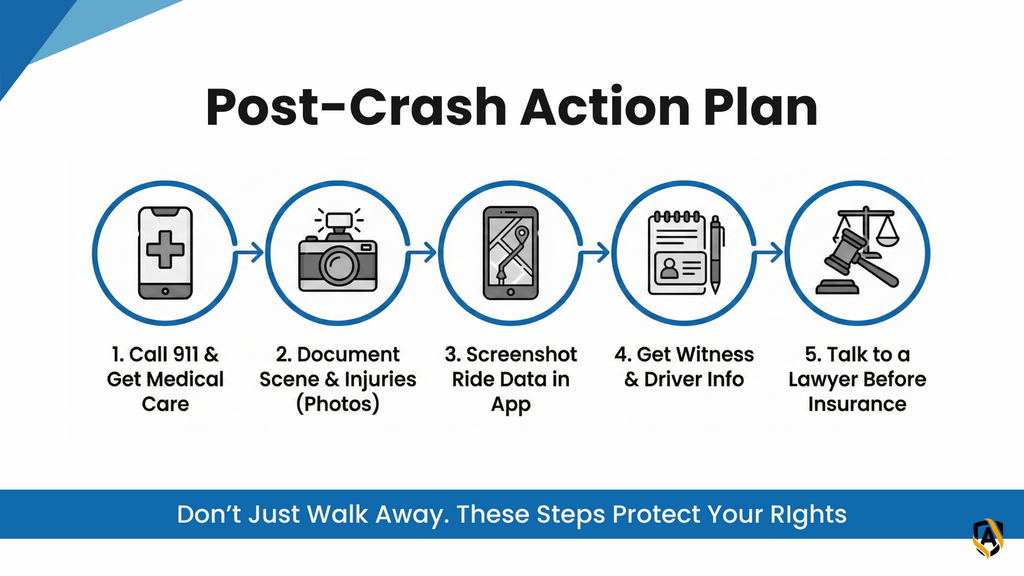
Following a scooter collision, injured riders should:
- Contact emergency services and seek immediate medical evaluation
- Request the police report number and understand how to obtain your Texas CR-3 crash report
- Document the scene with photographs of the scooter, vehicles, street signage, lighting, and injuries
- Screenshot the ride using the Bird or Lime app (recording time, route, and device ID)
- Collect witness and driver information including contact details and insurance data
- Preserve the scooter and app data through attorney preservation letters to service providers
- Consult an attorney before communicating extensively with insurance representatives
FAQ Section
Can I legally ride a Bird or Lime scooter on Austin sidewalks?
Yes, in most areas, provided riding is "reasonable and prudent" and pedestrians receive right-of-way. Downtown blocks on Congress and Guadalupe may have additional restrictions.
Do I have a claim if struck by a car in a bike lane or street?
Frequently, yes. Drivers who drift into bike lanes, cross paths without yielding, or fail to check before turning may face liability for medical expenses, lost wages, and pain and suffering. A pedestrian and bicycle accident lawyer can help evaluate your claim.
Am I automatically at fault if hit while riding on a sidewalk?
No. Austin permits careful sidewalk riding. Drivers exiting garages or alleys without stopping may bear primary fault despite the sidewalk location.
Who can be sued in Bird scooter injury cases?
Defendants may include at-fault drivers, property owners with hazardous conditions, and Bird or Lime for defective equipment or inadequate maintenance.
How do Austin's updated scooter regulations affect injury claims?
New regulations clarifying fleet size, night-time speed reductions, and parking standards help establish when riders and operators followed—or disregarded—established safety expectations.
Should I hire a lawyer or handle insurance claims independently?
While self-representation is possible, insurers frequently argue riders behaved "recklessly" or operated outside permitted zones to push fault beyond 51%. An attorney knowledgeable in local ordinances and state law provides essential advocacy. Understanding medical liens that affect settlements and the typical settlement negotiation timeline also requires legal expertise.
The National Highway Traffic Safety Administration provides safety data and guidelines for e-scooter use. Additionally, the Insurance Institute for Highway Safety conducts research on e-scooter crash patterns and injury severity.
About the Author

Aaron B Mickens
For over 25 years, Aaron has fought for justice on behalf of Austin's injured. He is committed to standing up to insurance companies and winning for clients across Central Texas.
View all articles by AaronNeed Legal Help?
Contact our experienced Austin personal injury attorneys for a free consultation.