Cyclist Rights When No Bike Lane Exists in Texas
Bicycling is common across Austin and many other Texas cities, but bike lanes are not always available. When cyclists must share the road with motor vehicles, questions often arise about who has the right of way and where a cyclist is legally allowed to ride. Texas law provides guidance for these situations and understanding those rules can help reduce confusion and conflict on the road.
This article explains cyclist rights when no bike lane exists, how Texas traffic laws apply, and what drivers are expected to do when sharing the roadway with people on bicycles.
Are Cyclists Allowed to Use the Road When There Is No Bike Lane
Yes. Under Texas Transportation Code, a bicycle is considered a vehicle in most situations. This means cyclists generally have the same rights and responsibilities as drivers of motor vehicles when using public roads.
When no bike lane is present, cyclists are allowed to ride on the roadway. They are not required to use sidewalks unless a local ordinance specifically permits or requires it. In many parts of Austin, sidewalk riding is restricted in certain areas, making the roadway the lawful option.
Where Cyclists May Ride on the Road

Texas law states that cyclists should ride as close as practicable to the right curb or edge of the roadway. However, this rule includes important exceptions.
A cyclist may move toward the center of the lane when:
- Passing another vehicle or cyclist
- Preparing to turn left
- Avoiding unsafe conditions such as potholes, debris, parked cars, or narrow lanes
- Traveling at the same speed as traffic
On many urban streets, lanes are too narrow for a car and bicycle to safely travel side by side. In these cases, a cyclist may legally occupy the full lane. Similar principles apply to understanding dooring accidents on South Congress and downtown Austin.
Driver Responsibilities When Sharing the Road
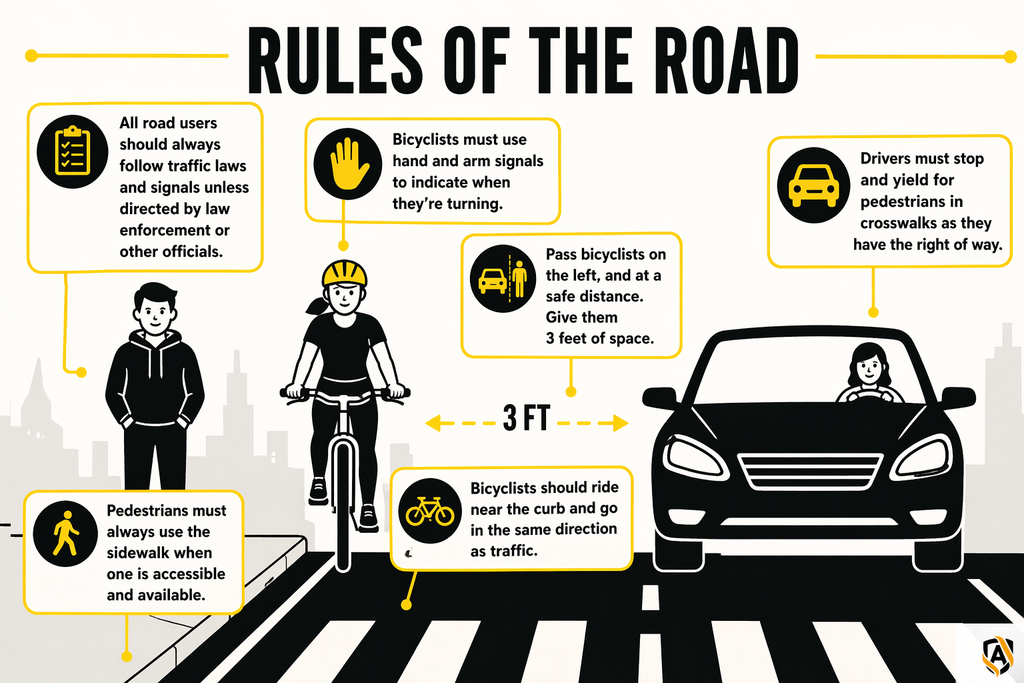
Drivers are required to recognize that cyclists have a lawful right to be on the road. This includes adjusting driving behavior to safely share space, as outlined by the Texas Department of Transportation (TxDOT).
Key driver responsibilities include:
- Passing cyclists at a safe distance
- Slowing down when necessary to avoid a collision
- Yielding when turning across a cyclist's path
- Avoiding aggressive or intimidating behavior
Texas law requires drivers to provide sufficient space when passing a bicycle. While the statute does not specify an exact distance in all situations, the expectation is that drivers pass only when it can be done safely.
Common Situations That Cause Confusion
Conflicts often occur when drivers believe cyclists should not be in the road if no bike lane exists. This misunderstanding can lead to unsafe passing, honking, or verbal confrontations.
Other common issues include:
- Drivers attempting to force cyclists off the road
- Cyclists being blamed for traffic delays
- Confusion at intersections without bike markings
Understanding that cyclists are legally permitted to use the road helps clarify these situations and supports safer interactions for everyone. For more context on cyclist safety, see Austin bicycle accident lawyer and cyclist rights guide.
Why These Rules Matter After a Crash
When a bicycle crash occurs on a road without a bike lane, questions about fault often depend on whether each party followed traffic laws. Knowing where a cyclist was legally allowed to ride and what drivers were required to do can be important when an incident is reviewed by insurance companies or authorities.
Clear knowledge of cyclist rights can also help promote safer road design and better compliance with traffic laws across Texas communities. Understanding how fault is determined in Texas car accidents provides additional context on liability principles.
The League of American Bicyclists provides educational resources on cyclist rights and safe road-sharing practices. Similarly, the National Highway Traffic Safety Administration (NHTSA) offers comprehensive bicycle safety guidance.
Cyclists should also be aware of differences in e-bike vs traditional bike injury laws in Texas and specific hazards like right hook bicycle accidents at intersections.
FAQ Section: Frequently Asked Questions About Cyclist Rights Without Bike Lanes
Q: Do cyclists have the same rights as cars in Texas
"Texas law generally treats bicycles as vehicles, giving cyclists many of the same rights and responsibilities as motor vehicle drivers."
Q: Can a cyclist ride in the middle of the lane if there is no bike lane
"Cyclists may use the full lane when it is too narrow to share safely or when avoiding hazards or preparing to turn."
Q: Are cyclists required to use the shoulder of the road
"Cyclists are not required to use the shoulder if it is unsafe or impractical due to road conditions."
Q: Is it legal for drivers to honk at cyclists for being in the road
"Using a horn to warn of danger may be allowed, but honking to harass or intimidate cyclists is not appropriate."
Q: Can a cyclist be ticketed for riding on the road without a bike lane
"Cyclists are generally permitted to ride on the road without a bike lane as long as they follow traffic laws."
Need Legal Help?
Contact our experienced Austin personal injury attorneys for a free consultation.
Need Legal Help?
Contact our experienced Austin personal injury attorneys for a free consultation.