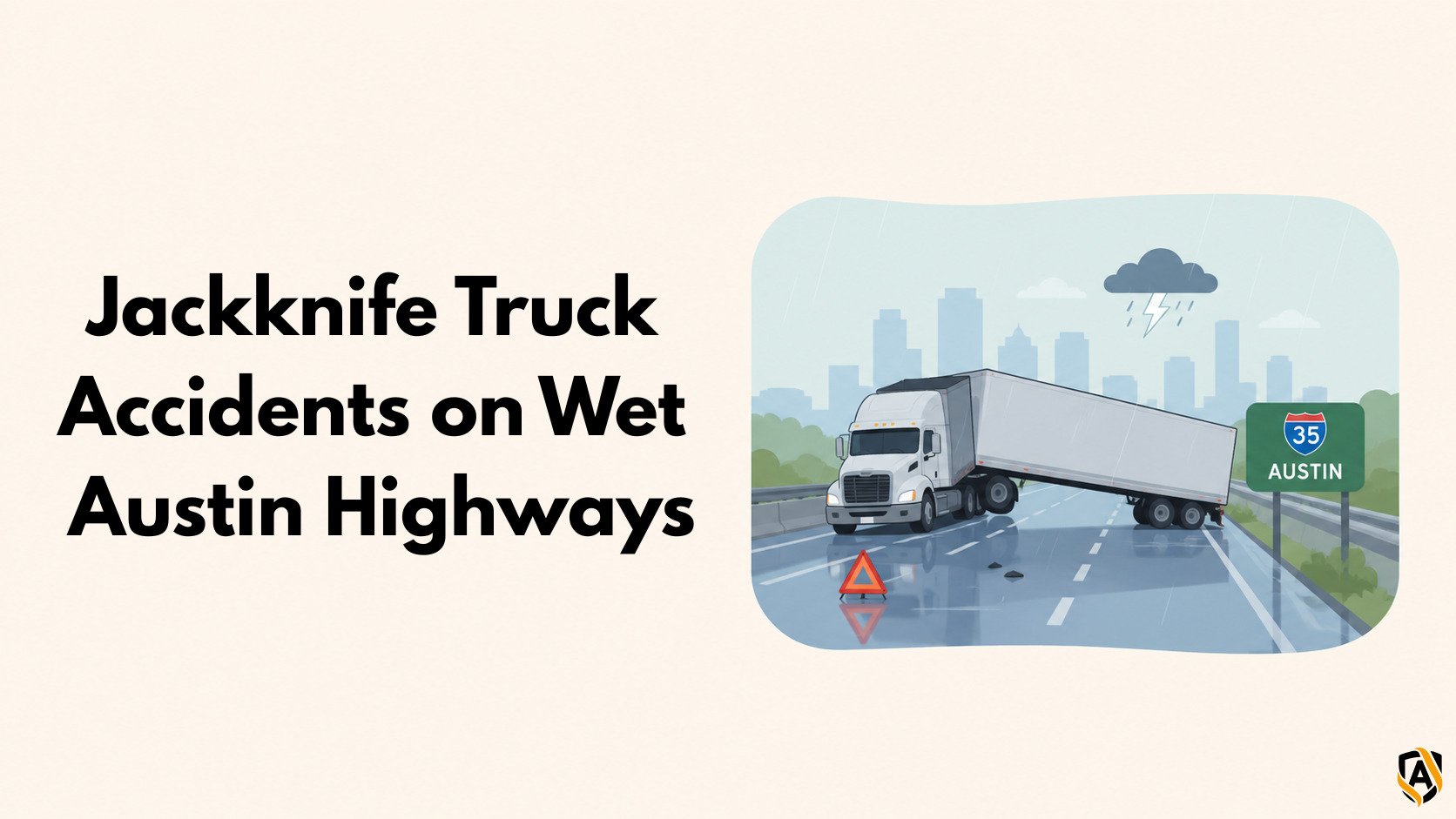
Jackknife Truck Accidents on Wet Austin Highways: Risks, Regulations, and Your Legal Rights
The Interstate 35 corridor through Austin experiences over 20,000 crashes annually, causing 153 fatalities and 471 serious injuries. Wet weather dramatically intensifies danger for truck accidents in Austin. NHTSA research shows jackknife odds are 3.22x higher in adverse weather. Austin's "Flash Flood Alley" designation and 35-36 inches of annual rainfall create hazardous conditions for commercial trucks. Federal data confirms 75% of weather-related crashes occur on wet pavement.
Understanding Jackknife Accidents
A jackknife accident occurs when a truck's trailer swings outward to form a V-shape with the cab, creating catastrophic conditions. The Federal Motor Carrier Safety Administration documented 4,842 fatal jackknife crashes in 2020, plus 107,000 injury crashes. These incidents represent five percent of all large truck crashes nationwide. The Large Truck Crash Causation Study linked vehicle factors including brakes, tires, and cargo shift to jackknife crashes, with risk increasing as truck weight increases.
Why Austin's Wet Highways Present Elevated Jackknife Risk
Austin's climate creates dangerous conditions for commercial trucks. NOAA climate data identifies May, October, and June as wettest months, with intense thunderstorms dumping large rain amounts quickly. The NOAA Atlas 14, Volume 11 found 100-year rainfall amounts increased by three to 13 inches in 24 hours.
Thirteen percent of commercial vehicle crashes occur in rain or fog, while 16 percent happen on wet pavement. The City of Austin identifies flood-prone areas including Waters Park Road between 183 and MoPac, where sudden water creates treacherous conditions for heavy trucks.
I-35 and High-Risk Corridors in Austin
I-35's Austin section carries 200,000 vehicle trips daily, 85% local traffic. TxDOT documented over 10,000 crashes from 2017-2022, with speeding and inattention as top factors. Austin's I-35 ranks third most congested in Texas. Understanding I-35 construction zone crash liability is critical as improvements continue.
Nearly half of Texas' population lives along the I-35 corridor, creating high-volume traffic that increases emergency braking scenarios. High-speed corridors like SH-130 present additional risks with 85 mph limits. TxDOT planned $5.6 billion in infrastructure improvements.
Federal and Texas Safety Requirements Often Violated
Federal regulations require antilock brake systems on trucks manufactured after March 1997-1998. Despite this, studies found brake problems in 32.7 percent of inspected trucks, with 9.8 percent out-of-service rates.
Federal tire regulations (49 CFR 393.75) mandate 4/32-inch tread depth on front wheels and 2/32-inch on others. Electronic Stability Control systems include anti-jackknife functionality. More than one-third of inspected trucks had out-of-service-level defects. Texas DPS requires commercial vehicle safety inspections statewide, yet violations persist.
Texas Legal Framework: Liability and Comparative Fault
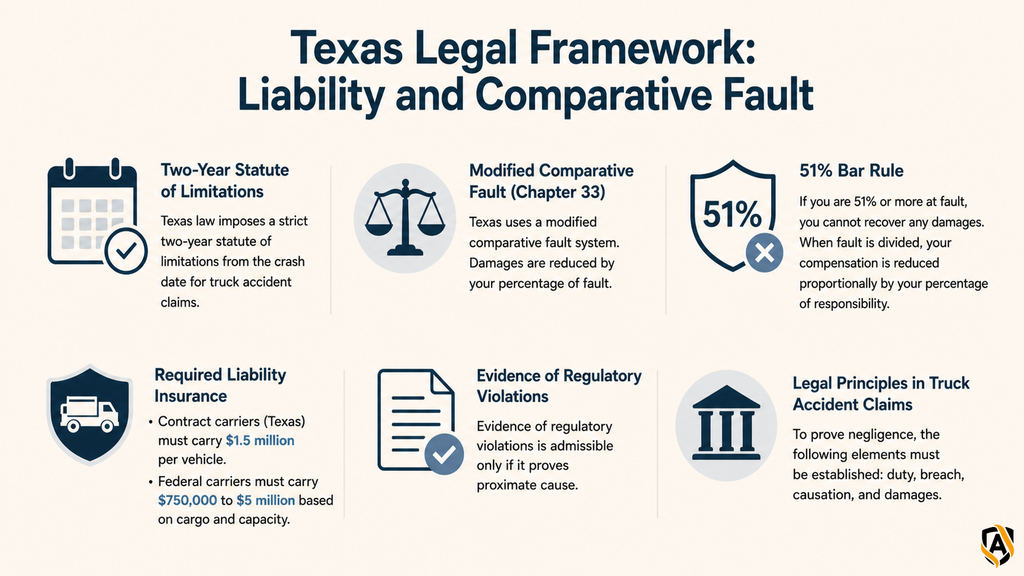
Texas law imposes a strict two-year statute of limitations from the crash date for truck accident claims. The Texas proportionate responsibility statute (Chapter 33) implements a modified comparative fault system. Understanding Texas' modified comparative negligence and 51% bar rule is essential, as injured parties bearing 51 percent or more fault cannot recover damages. When fault is divided, damages are reduced proportionally by the victim's percentage of responsibility, making how fault is determined in Texas critically important.
Texas law requires contract carriers to maintain $1.5 million liability insurance per vehicle. Federal carriers must carry $750,000 to $5 million based on cargo and capacity. Evidence of regulatory violations is admissible only if it proves proximate cause. Negligence requires proving duty, breach, causation, and damages.
When to Seek Legal Representation: Decision Framework
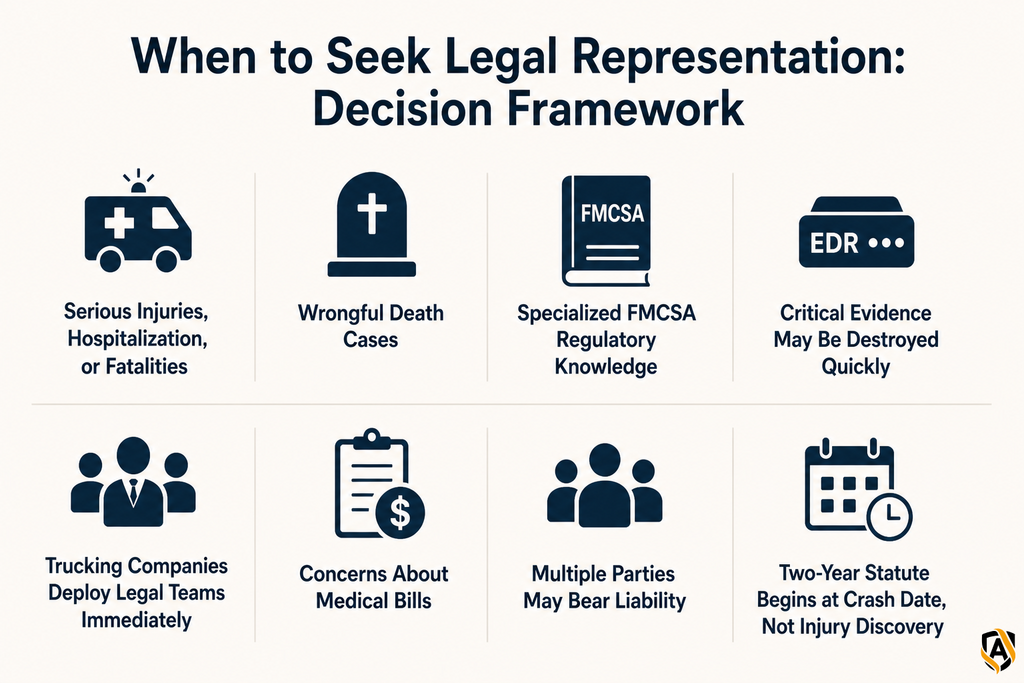
Consult a truck accident attorney when crashes involve serious injuries, hospitalization, or fatalities. For fatal cases, understanding wrongful death damages in Texas is essential. Commercial truck cases require specialized FMCSA regulatory knowledge. The ABA approved board certification for truck accident attorneys in 2018.
Critical evidence - black box data, maintenance records, driver logs—may be destroyed quickly. Trucking companies deploy legal teams immediately. Victims face concerns about who pays medical bills, making early guidance valuable. Multiple parties may bear liability: driver, carrier, maintenance company, manufacturers. The two-year statute begins at crash date, not injury discovery.
Protecting Your Rights After a Jackknife Accident
Austin's Flash Flood Alley weather and I-35 congestion create elevated jackknife risk. If involved in a crash, know what to do after an accident to protect your claim. Understanding Texas' proportionate responsibility and the two-year deadline is critical. When equipment failures or violations contribute to crashes, specialized legal expertise navigates complex regulations to secure compensation.
Frequently Asked Questions
What makes jackknife accidents more likely on Austin highways?
Austin's Flash Flood Alley location creates sudden wet conditions from intense thunderstorms. I-35's 200,000 daily trips increase emergency braking scenarios. Jackknife odds are 3.22x higher in adverse weather.
How long do I have to file a truck accident claim in Texas?
Texas imposes a two-year statute of limitations from the crash date, regardless of when injuries are discovered. Missing this deadline permanently bars recovery.
What if I was partially at fault for the jackknife accident?
Texas reduces damages by your fault percentage. The 51% Bar Rule bars recovery if you're 51% or more at fault.
What insurance coverage must Texas commercial trucks carry?
Texas law requires contract carriers to carry $1.5 million per vehicle. Federal carriers need $750,000-$5 million based on cargo and capacity.
What evidence is critical in jackknife accident cases?
Black box data (overwritten within 30 days), maintenance records, and driver logs are critical. Immediate legal action preserves evidence before trucking companies secure or destroy it.
About the Author

Aaron B Mickens
For over 25 years, Aaron has fought for justice on behalf of Austin's injured. He is committed to standing up to insurance companies and winning for clients across Central Texas.
View all articles by AaronNeed Legal Help?
Contact our experienced Austin personal injury attorneys for a free consultation.