Commercial Trucking Accidents on SH 130: Why They Are Different from Regular Car Wrecks
Austin residents recognize SH 130 as the "Pickle Parkway"-the toll road offering an escape from I-35 congestion. More significantly, it features "the highest legal speed limit in the United States: 85 mph."
For standard vehicles, this speed presents challenges. For an 80,000-pound 18-wheeler, the physics become unforgiving. Collisions involving commercial trucks on this corridor differ fundamentally from typical vehicle accidents in legal, mechanical, and strategic dimensions. Understanding how fault is determined in Texas car accidents is essential, but truck accidents involve additional federal regulations and liability considerations.
The Tire Capacity Issue
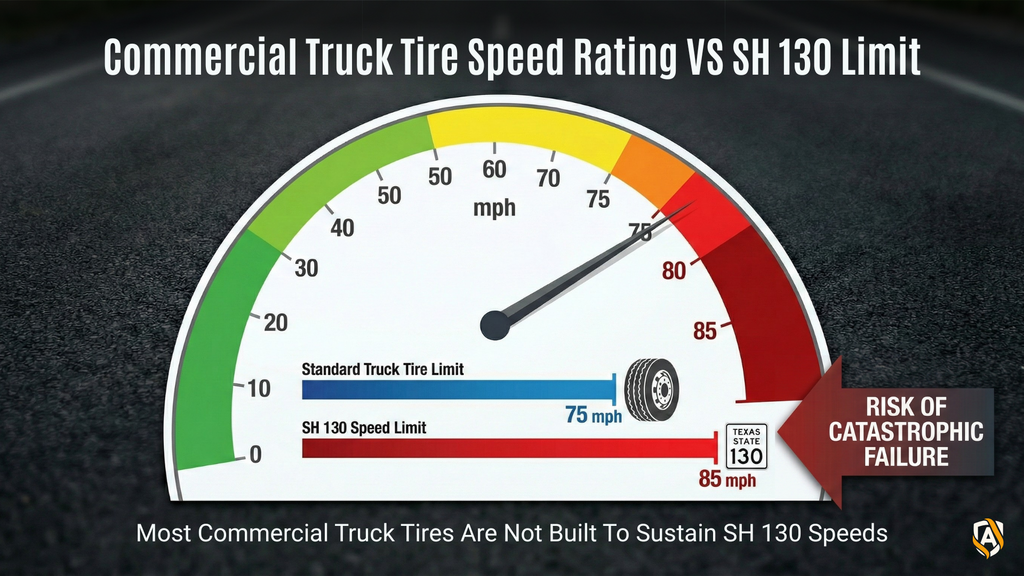
A critical technical concern often overlooked: many commercial truck tires carry speed ratings below 85 mph. Standard heavy-duty truck tires typically max out at 75-81 mph ratings. Extended operation at posted speeds creates dangerous heat accumulation in the tire structure.
Tire debris analysis becomes evidentiary gold-sidewall markings reveal whether equipment met regulatory standards for the road conditions. The Federal Motor Carrier Safety Administration establishes equipment standards that trucking companies must follow.
Electronic Data Recovery
Modern commercial trucks contain Electronic Control Modules recording pre-impact conditions: vehicle velocity, brake application timing, engine RPMs, and operational hours. This data represents objective witness testimony.
However, preservation matters critically. Trucking companies control vehicles and their data systems. Without immediate legal preservation demands, evidence can disappear through repairs, scrapping, or deletion within days. This is similar to the evidence preservation challenges in negligent entrustment cases in Texas, where establishing who controlled the vehicle is crucial.
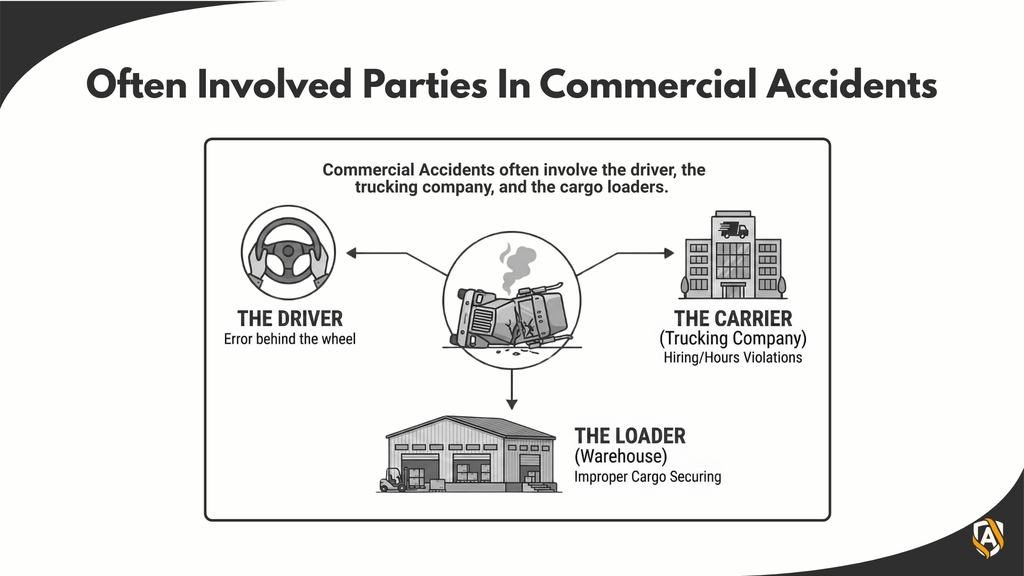
The carrier (hiring practices, regulatory violations)
Loading operations (improper cargo securing)
Supply chain investigation becomes essential for establishing actual responsibility. Working with a truck accident lawyer in Austin ensures all potentially liable parties are identified and held accountable.
Federal Regulatory Framework
Commercial operators face Federal Motor Carrier Safety Administration (FMCSA) standards governing hours-of-service requirements, medical fitness, and logbook accuracy. Fatigue combined with high-speed travel creates compounded risk factors requiring specialized legal analysis. The FMCSA Hours of Service regulations set strict limits on driving time to prevent fatigue-related crashes.
These regulations are particularly important in cases involving I-35 construction zone crashes, where truck drivers must navigate changing road conditions at high speeds.
High-speed corridor collisions demand immediate, specialized response. The complexity transcends standard insurance claim handling. Understanding the settlement negotiation timeline for Texas injury cases is important, but truck cases often involve longer timelines due to the multiple parties and complex federal regulations involved.
The Insurance Institute for Highway Safety provides research on truck safety and crash prevention technologies that can be relevant in establishing liability.
For over 25 years, Aaron has fought for justice on behalf of Austin's injured. He is committed to standing up to insurance companies and winning for clients across Central Texas.