Passenger Rights: Can You Sue If Your Driver Was at Fault?
Being injured as a passenger raises concerns about suing your own driver. Passengers are almost never at fault, giving you the right to seek compensation for injuries and lost wages. Critically, insurance policies pay claims-not your driver's personal assets. This removes emotional barriers about filing against friends or family. Time limits vary by state, making prompt evaluation essential.
When Passengers Have the Right to Sue
Drivers must exercise reasonable care on the road. When they breach this duty causing injuries, personal injury law allows recovery. Historically, "guest passenger statutes" prevented non-paying passengers from suing drivers for simple negligence. By 1996, only Alabama retained such laws.
Most states now allow passengers to sue for ordinary negligence. You don't need to prove fault-liable drivers will be identified. You can file claims against the at-fault driver's insurance. When multiple drivers share responsibility, you may have claims against several parties, maximizing recovery.
Understanding Your State's Fault Rules
State negligence laws significantly impact compensation recovery. Three main systems govern fault determination nationwide.
Contributory Negligence: Only Alabama, Maryland, North Carolina, Virginia, and Washington D.C. use this strictest rule. Being even 1% at fault completely bars recovery. Passengers are rarely assigned fault.
Pure Comparative Negligence: Alaska, Arizona, California, Florida, Kentucky, and New York allow recovery unless you're 100% responsible. Damages reduce by your fault percentage.
Modified Comparative Negligence: Over 30 states use this system. The 51% bar rule in Texas and 21 other states allows recovery if you're less than 51% at fault. Ten states use a 50% bar rule.
These rules affect how liability is calculated among drivers, rarely limiting passenger recovery.
Insurance Coverage Available to Injured Passengers
Insurance coverage depends on whether you're in a no-fault or at-fault state.
No-Fault States: New York, Massachusetts, Michigan, and others require Personal Injury Protection (PIP). New York's PIP pays up to $50,000 per person for economic losses covering passengers. File claims with the vehicle's insurance policy.
At-Fault States: Passengers claim against the negligent driver's liability insurance. Texas requires minimum coverage of $30,000 per person. Maine mandates $50,000 per person.
Uninsured/Underinsured Motorist Coverage: When at-fault drivers lack adequate insurance, UM/UIM coverage protects passengers covering medical bills and damages.
Medical Payments Coverage: This optional coverage provides immediate payment regardless of fault, covering bills while claims process.
What Compensation Passengers Can Recover
Injured passengers can pursue two damage categories.
Economic damages include medical expenses, hospital bills, rehabilitation costs, lost income, loss of earning capacity, and property damage with specific monetary values calculated from actual bills.
Non-economic damages compensate for pain and suffering, mental anguish, physical disfigurement, and permanent disability. Courts often calculate pain and suffering by multiplying economic damages by 1.5 to 5 depending on severity.
A real case example: a passenger with permanent hand injury and $12,678 in medical expenses received full medical costs plus $20,000 for pain and suffering-a 1.6x multiplier. Pain and suffering typically comprises the largest compensation component.
How to File Your Passenger Injury Claim
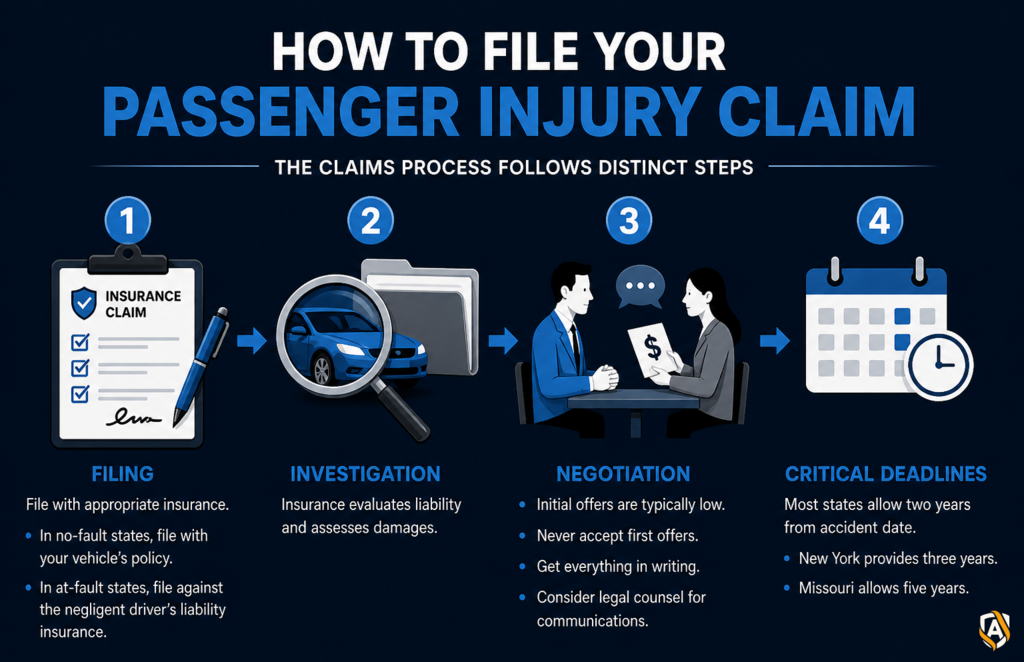
The claims process follows distinct steps.
Filing: File with appropriate insurance. In no-fault states, file with your vehicle's policy. In at-fault states, file against the negligent driver's liability insurance.
Investigation: Insurance evaluates liability and assesses damages. Be cautious-adjusters minimize payouts.
Negotiation: Initial offers are typically low. Never accept first offers. Get everything in writing. Consider legal counsel for communications.
Critical Deadlines: Most states allow two years from accident date. New York provides three years. Missouri allows five years. Negotiations take months, making early action essential. Missing deadlines means losing compensation rights forever.
Special Scenarios: Rideshare, Family Drivers & Multiple Parties
Rideshare Accidents: Uber and Lyft provide substantial coverage during active rides. When rides are accepted or in progress, companies provide at least $1 million in liability coverage.
Teen and Family Drivers: California Vehicle Code 17707 makes parents automatically liable for minor children's damages. Negligent entrustment claims apply when allowing incompetent drivers vehicle use.
Multiple At-Fault Drivers: Multi-car accidents let passengers claim against several parties. Joint and several liability in some states allows recovering full damages from any defendant over 50% at fault.
Decision Framework: When to Hire a Lawyer
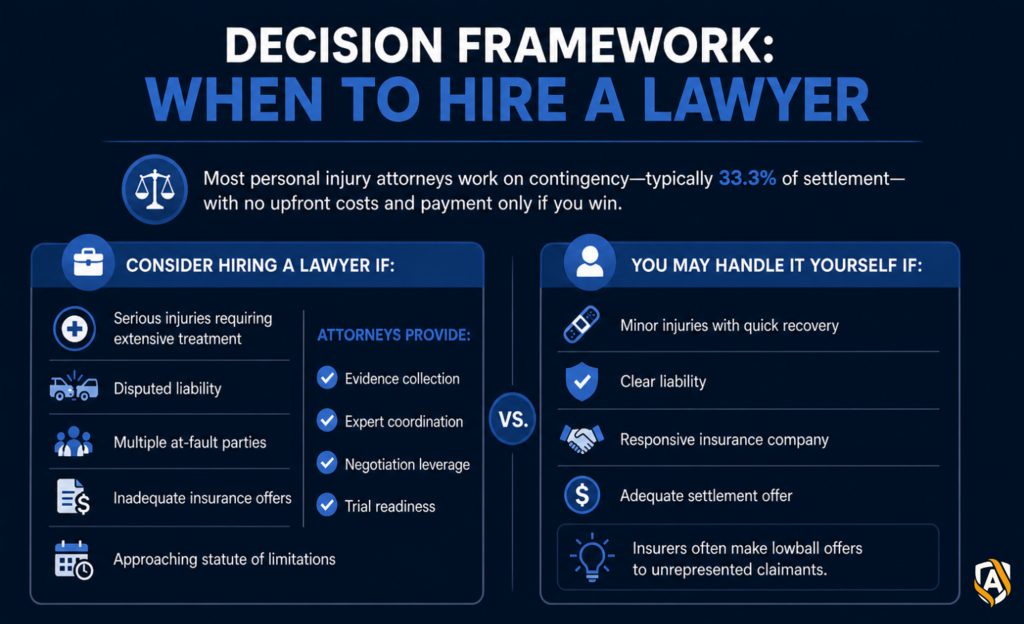
Most personal injury attorneys work on contingency-typically 33.3% of settlement-with no upfront costs and payment only if you win.
Consider hiring attorneys for serious injuries requiring extensive treatment, disputed liability, multiple at-fault parties, inadequate insurance offers, or approaching statute of limitations. Attorneys provide evidence collection, expert coordination, negotiation leverage, and trial readiness.
Self-representation may work for minor injuries, clear liability, responsive insurers, and adequate settlements. However, insurers often make lowball offers to unrepresented claimants.
Texas requires written contingency fee agreements explaining fee calculations.
Conclusion
As an injured passenger, you have legitimate rights to pursue compensation even when your driver caused the accident. Insurance coverage funds claims-not personal assets. State laws and time limits make prompt evaluation critical. For serious injuries, professional guidance maximizes recovery.
Frequently Asked Questions
Can I sue if my friend or family member was driving?
Yes. Insurance companies pay claims, not your friend personally. Their auto liability insurance covers your damages, protecting their personal assets.
What if the driver had only minimum insurance coverage?
Pursue uninsured/underinsured motorist coverage from your policy or file claims against multiple at-fault drivers for additional coverage.
How long do I have to file a claim?
Most states allow two years from accident date. New York provides three years, Missouri allows five. Missing deadlines bars recovery forever.
Do I need a lawyer for a passenger injury claim?
For serious injuries, disputed liability, or low offers, yes. Attorneys work on contingency (typically 33.3%), so you only pay if you win.
About the Author

Aaron B Mickens
For over 25 years, Aaron has fought for justice on behalf of Austin's injured. He is committed to standing up to insurance companies and winning for clients across Central Texas.
View all articles by AaronNeed Legal Help?
Contact our experienced Austin personal injury attorneys for a free consultation.